Proudly serving Phoenix, Scottsdale, Glendale, Tempe, Mesa, Chandler & surrounding areasCall or Text 24/7: 480-264-9683
Aerial drone view of the Sonoran Desert foothills and residential neighborhood in Phoenix, AZ during golden hour.

Affordable Flooring Options in Phoenix, AZ

If you have been searching for cheap flooring options in Phoenix, Phoenix Expert Flooring installs and repairs luxury vinyl plank, tile, hardwood, laminate, carpet, and epoxy flooring across the Valley. Affordable projects can also include hardwood refinishing, damaged-floor replacement, and commercial flooring for offices and retail spaces. Inexpensive material choices are matched to room traffic, slab moisture, and actual use rather than whatever happens to be on sale. A budget-friendly plan keeps preparation and installation details visible in a line-item estimate. The cheapest quote is useful only when it covers the same work and materials as the alternatives.

Phoenix floors face Arizona heat, slab construction, desert dust, direct sun, and monsoon humidity swings. Concrete moisture testing, subfloor preparation, transition details, old-material disposal, and code compliance all affect the real scope. Quotes for the same square footage can differ by thousands when slab moisture mitigation, ADA-compliant transitions, or old tile and mastic removal are handled differently. Line-item estimates make those tradeoffs visible for projects in Phoenix, Scottsdale, Tempe, Mesa, Chandler, Glendale, and the surrounding Valley.

Phoenix Flooring Price Comparison

Compare equivalent scopes before comparing flooring prices. The lowest prices are meaningful only when material grade, labor, subfloor work, moisture testing, transitions, and removal are all included rather than appearing later as add-ons. The ranges below put common Phoenix flooring projects on consistent units, and the calculator follows directly after the comparison for room-specific planning.

Phoenix Flooring Price Ranges by Project Scope

Flooring service or scopePrice rangeWhat the range covers or changes it
Typical flooring installation$5 to $13 per square footIncludes materials and labor; material choice and required preparation affect the total.
Laminate flooring installation$3 to $13 per square foot installedIncludes installation; material grade and room layout affect the total.
Subfloor leveling or repair$1 to $3 per square footCovers leveling or repair before flooring; the slab or subfloor condition changes the scope.
Hardwood floor refinishing$3 to $8 per square footCovers refinishing; floor condition and the sanding and finish schedule affect the work.
Garage or slab epoxy flooring$6 to $9 per square foot on averageCovers epoxy flooring; concrete preparation and coating type change the price.
Midrange flooring installation labor$108 to $140 per square meterCovers labor per installation area; pattern layouts, stair transitions, and diagonal tile can add time.

Affordable Flooring Options in Phoenix, AZ

Affordable flooring starts by matching the room to the material. Waterproof luxury vinyl plank suits kitchens, bathrooms, pets, and slab-on-grade homes; standard-format porcelain tile handles constant water exposure without the added labor of rectified or large-format designer lines. Laminate materials alone typically run $1 to $5 per square foot and keep dry bedrooms and living areas economical, while mid-weight carpet fits lighter-use bedrooms and closets. Engineered hardwood can provide real wood grain with better seasonal movement tolerance than solid planks in many rooms, and epoxy resists tire marks, oil, and surface heat on garage slabs. The cheapest upfront material is not always the better value when moisture, traffic, and direct sun point to a more durable choice.

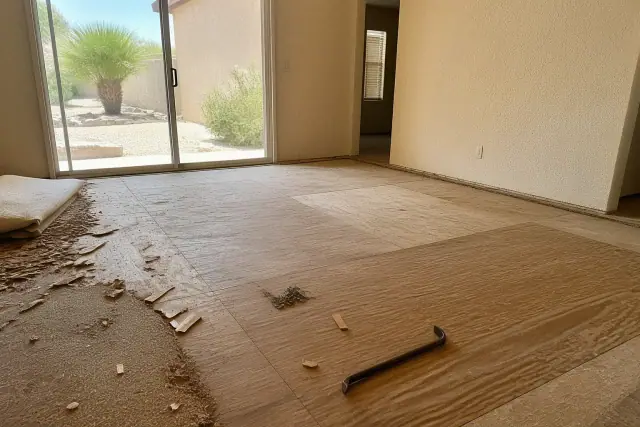
Technician preparing a wooden subfloor for new flooring installation in a Phoenix, AZ residence.

Right-Size Each Flooring Scope

A low cost flooring plan begins with accurate measurements and a clear decision about which surfaces truly need replacement. Matching the scope to the damaged area, room use, and soundness of the subfloor can protect the budget without skipping essential work.

  • Repair cracked tile, worn carpet seams, or water-damaged areas when the subfloor remains sound.
  • Choose standard-format porcelain tile instead of labor-intensive rectified or large-format lines.
  • Use mid-weight residential carpet in lighter-wear bedrooms rather than paying for premium plush grades.
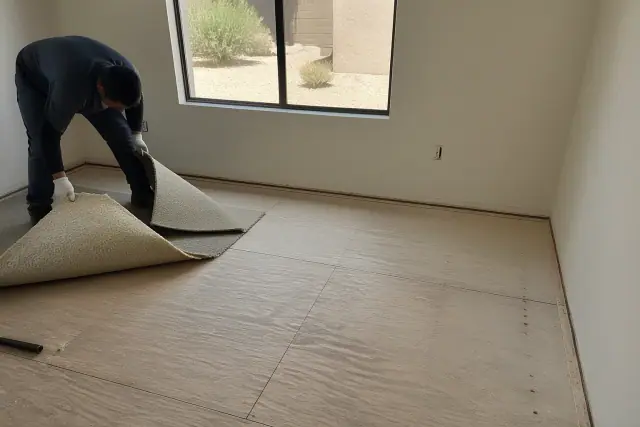
A technician prepares a wooden subfloor in a Phoenix, AZ living room by removing old carpet and debris.

Compare Flooring by Room Conditions

Useful flooring comparisons account for water, traffic, sunlight, and the concrete below the finish. Traditional epoxy coatings range from $3 to $10 per square foot, and concrete preparation can be as important to the result as the coating selection. Cheap flooring can become costly if the core swells, the finish wears too quickly, or the slab was not tested before installation.

  • Use waterproof LVP or porcelain tile near sinks, dishwashers, bathrooms, and monsoon-prone entries.
  • Reserve laminate for dry living areas away from sustained moisture exposure.
  • Test garage and concrete slabs for moisture before choosing an epoxy coating system.
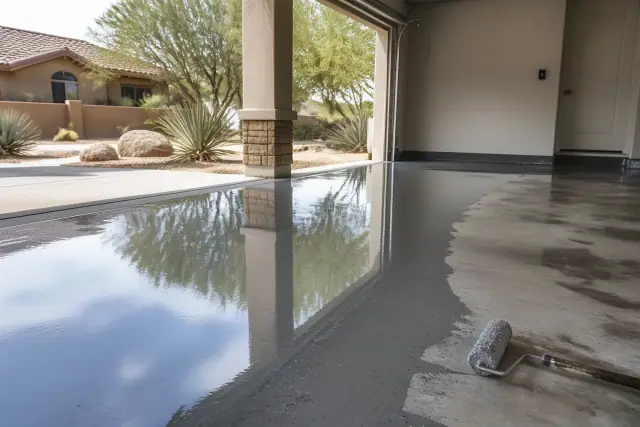
Professional applying glossy epoxy resin to a garage floor at a job site in Phoenix, AZ.

Protect Flooring Durability and Value

Long-term value depends on wear-layer thickness, core density, finish grade, and correct installation. Those specifications can separate a floor that lasts a decade from one that needs replacement in three years, so material labels and installation details matter as much as square-foot price.

  • Set porcelain tile with thin-set and grout work that follows TCNA standards.
  • Use CRI-recommended carpet seaming and stretching for a durable budget choice.
  • Plan hardwood refinishing roughly every 7 to 10 years using NWFA sanding and finish schedules.

Phoenix Flooring Cost Factors

Project size, existing floor condition, material specifications, layout complexity, access, and scheduling all shape a flooring estimate. Phoenix covers 517.9 square miles across the Salt River Valley, so travel between areas such as Deer Valley, Ahwatukee, and Laveen can also affect scheduling and sometimes mobilization on smaller jobs. A written scope makes it easier to see which factors are fixed and which choices can be adjusted.

Project Size and Floor Condition

Square footage establishes the material and labor baseline, while damaged or uneven surfaces add preparation. Structural issues such as sagging floors can add $1,000 to $8,500 in repair costs once uncovered, making an early condition check important before the finish floor is ordered.

Materials and Installation Detail

Material tiers change wear layers, core density, finish quality, moisture resistance, and foot-traffic ratings. Installation detail changes labor too: flowing multiple rooms together, pattern layouts, stair transitions, and diagonal tile take more time than a straightforward layout. For commercial offices and retail spaces, product ratings, City of Phoenix Development Services Department requirements, and ADA-compliant transitions also belong in the scope.

Access, Removal, and Preparation

Old carpet, tile, or mastic removal adds labor and disposal before installation begins. Concrete leveling, damaged subfloor repair, door and stair transitions, and moisture mitigation should be identified up front; epoxy projects in particular benefit from concrete moisture testing under ASTM F2170. Clear access to rooms and slabs also helps keep the planned sequence intact.

Timing and Required Flooring Work

Flexible start dates and off-peak scheduling may lower labor costs when crews are not compressing multiple jobs into the same week. The timeline still needs to allow for tear-out, slab or subfloor preparation, moisture work, installation, transitions, and finish steps. Comparing bids by this complete sequence keeps a shorter quote from hiding required work.

Budget-Friendly Phoenix Flooring Planning

Keep the flooring scope budget friendly by protecting the preparation that supports the finished surface. Trimming material upgrades can be reasonable, but skipping leveling, moisture checks, correct transitions, seaming, stretching, or setting work can shorten service life and increase replacement risk.

A free in-home flooring consultation can turn room use, traffic, moisture, and material preferences into a defined scope. The resulting written estimate should separate material grade, square footage, subfloor preparation, removal, transitions, and labor, while listing the manufacturer's product line, wear-layer specifications, and applicable manufacturer warranty terms.

  1. Measure the rooms and identify how each space is used.
  2. Check subfloor condition and concrete moisture before selecting materials.
  3. Compare suitable LVP, tile, hardwood, laminate, carpet, or epoxy options by room.
  4. Review a line-item estimate for preparation, materials, labor, removal, and transitions.

Request an Affordable Flooring Estimate in Phoenix

Request a Phoenix flooring estimate built around your measured square footage, preparation needs, material choice, moisture conditions, and room use. Phoenix Expert Flooring can review options for homes, garages, offices, and retail spaces, then provide a property-specific number instead of relying on a generic average.