Proudly serving Phoenix, Scottsdale, Glendale, Tempe, Mesa, Chandler & surrounding areasCall or Text 24/7: 480-264-9683
Aerial drone view of a suburban residential neighborhood with desert landscaping and saguaro cacti in Phoenix, AZ.

Carpet Installation, Replacement & Stretching Services in Phoenix, AZ

Phoenix Expert Flooring provides professional carpet installation for homeowners and businesses across Phoenix. Our flooring services also include carpet replacement and stretching, plus tile, hardwood, laminate, luxury vinyl plank, epoxy, and commercial flooring. We handle projects ranging from single-bedroom carpet swaps in Arcadia bungalows to full-building recarpeting in downtown Phoenix office towers. Every carpet project begins with the room, material, and performance needs rather than a one-size-fits-all recommendation.

Phoenix heat, low humidity, and Sonoran Desert dust can accelerate fading, drying, and wear, while concrete slabs require careful moisture planning. Our licensed and insured installers follow Carpet and Rug Institute standards, including CRI 105 for residential and commercial work. We test slab moisture, use underlayment suited to slab-on-grade construction, seal seams, and tension carpet with a power stretcher instead of relying on a knee kicker alone. That preparation helps prevent wrinkles, bunching, visible seams, and problems that can develop after installation.

Request a free in-home estimate to compare full-size carpet samples in your own lighting and receive a measured, itemized project plan.

Phoenix Expert Flooring provides carpet installation throughout Phoenix and the surrounding Valley cities of Scottsdale, Tempe, Mesa, Glendale, and Chandler.

★ ★ ★ ★ ★4.9/5 Average Rating · 20+ Years of Experience · Thousands of Customers Helped · Licensed & Insured · Residential & Commercial

Carpet Installation Options & Benefits

What Professional Carpet Installation Includes

Professional carpet installation combines accurate measurement, material planning, surface preparation, padding, tack strip, seam work, and full-span stretching. Doorway transitions, closet returns, HVAC vents, and floor outlets are considered before the roll is cut so the finished layout fits the room.

Phoenix covers 517.9 square miles, and slab-on-grade construction is standard across most local subdivisions. Those concrete floors call for moisture testing and moisture-barrier planning before adhesive, padding, or carpet backing goes down, especially because low humidity can make adhesives dry faster during installation.

We explain fiber type, face weight, twist level, padding density, stain resistance, sun exposure, and expected traffic before materials are ordered. The goal is to match the carpet and pad to how the room will actually be used, whether that means a quiet bedroom, a busy living area, a rental turnover, or a commercial floor.

Benefits of Professional Carpet Installation

The right installation method protects the carpet you selected and helps it perform as intended in Phoenix conditions. Careful preparation also makes pricing, timing, and future maintenance easier to understand.

  • Power-stretched carpet resists wrinkles and bunching.
  • Planned, heat-sealed seams stay away from traffic paths when possible.
  • Proper padding density improves comfort and reduces backing wear.
  • Moisture testing helps protect carpet installed over concrete slabs.
  • Room measurement accounts for closets, transitions, vents, and outlets.
  • Full-size samples show color and texture in the room's actual light.
  • Itemized estimates separate materials, labor, removal, and repairs.
  • Commercial carpet tile allows targeted replacement in high-wear areas.
Phoenix Carpet Services

Complete Carpet Installation & Care

From a bedroom update to a downtown office recarpeting project, our carpet services cover new installation, replacement, stretching, padding, and the surface preparation needed beneath the finished floor. Each service is planned around traffic, sunlight, subfloor condition, material choice, and the customer's schedule.

Residential Carpet Installation

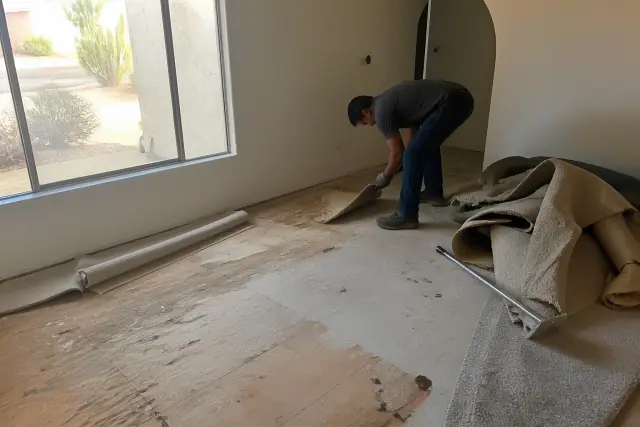
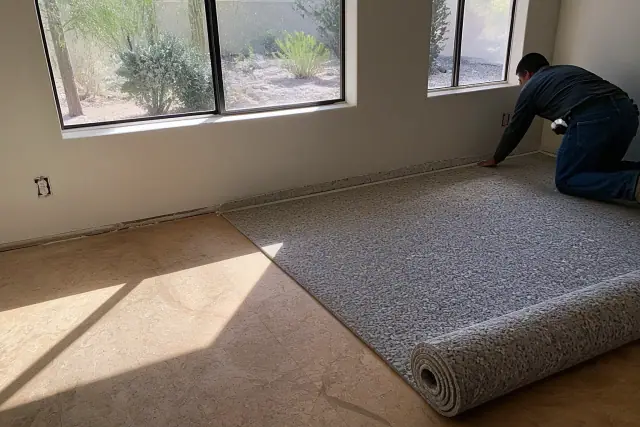
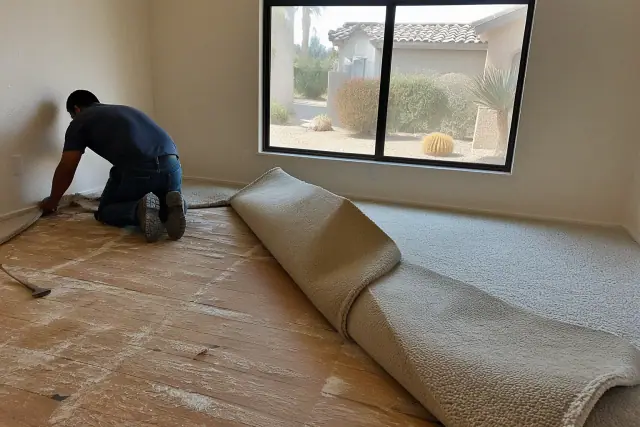
Technician removing old carpet to reveal the wooden subfloor during a residential installation in Phoenix, AZ.

We install carpet in Phoenix bedrooms, living rooms, rentals, and custom homes, with options matched to traffic and comfort. Softer plush or frieze styles can suit lower-traffic bedrooms, while dense, tight-twist and solution-dyed nylon options are better suited to busy living areas and rooms with strong west- or south-facing sun.

Request Estimate

Commercial Carpet Installation

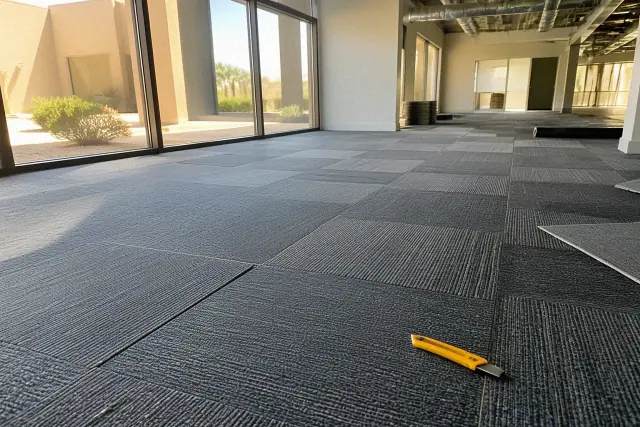
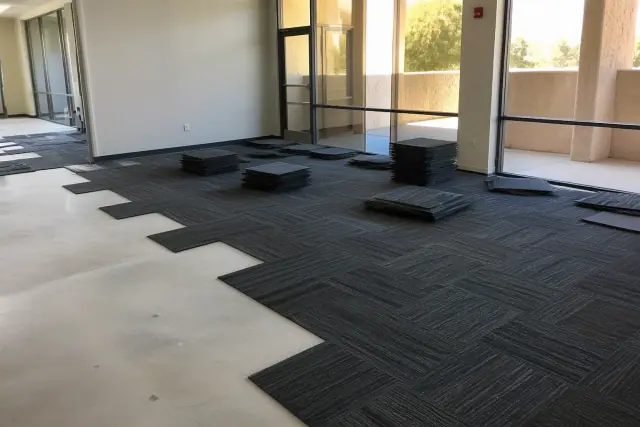
Commercial carpet tile installation in a workspace with sunlight streaming through windows in Phoenix, AZ.

Office and retail carpet projects can be scheduled overnight or on weekends to reduce disruption. We plan carpet tile layouts around continuous foot traffic, coordinate transitions with adjacent luxury vinyl plank or tile, and follow ADA transition-height requirements at doorways and thresholds.

Request Estimate

Carpet Replacement & Removal

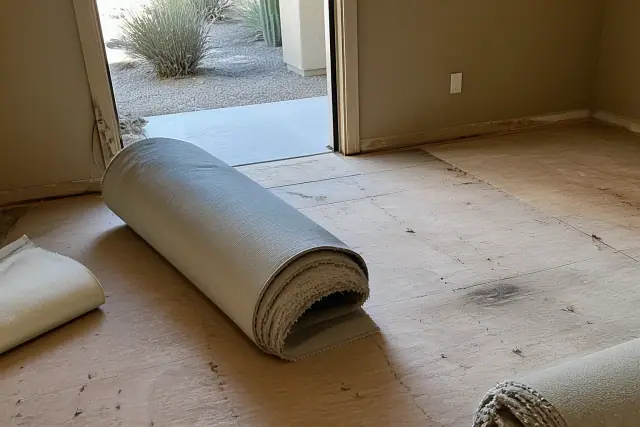
Technician removing old carpet to prepare a wooden subfloor for new installation in a Phoenix, AZ home.

Replacement can include pulling up old carpet and pad, removing staples and worn tack strip, and hauling debris off site. Once the floor is exposed, we inspect for water staining, cracks, uneven areas, old adhesive, or pest damage before new materials cover the surface.

Request Estimate

Carpet Stretching & Loose Carpet Repair

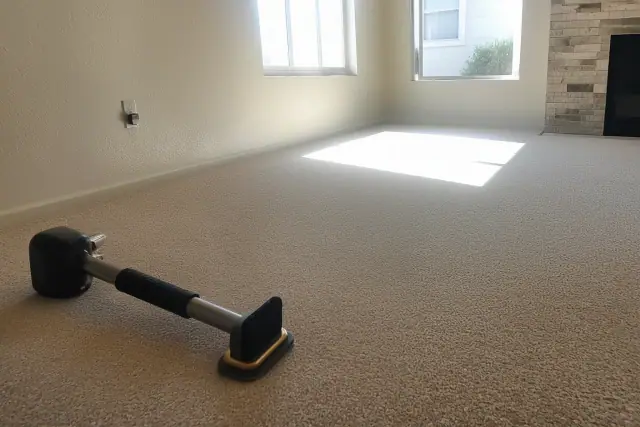
A knee kicker tool on taut, repaired carpet in a Phoenix, AZ living room with sunlight on stucco walls.

Ripples and bunching often point to installation with a knee kicker alone or padding that has broken down. A professional power stretch at the first sign of looseness can restore tension, reduce trip hazards, and slow the concentrated fiber wear that develops along each fold.

Request Estimate

Carpet Padding Installation

Technician installing dense carpet padding over a wooden subfloor in a home in Phoenix, AZ.

Padding supports the carpet backing, improves comfort, and adds insulation over Phoenix's hot slab floors. Moving from a basic 6-pound pad to an 8-pound rebond pad can improve durability and feel without the cost jump associated with changing the carpet grade itself.

Request Estimate

Subfloor Repair & Preparation

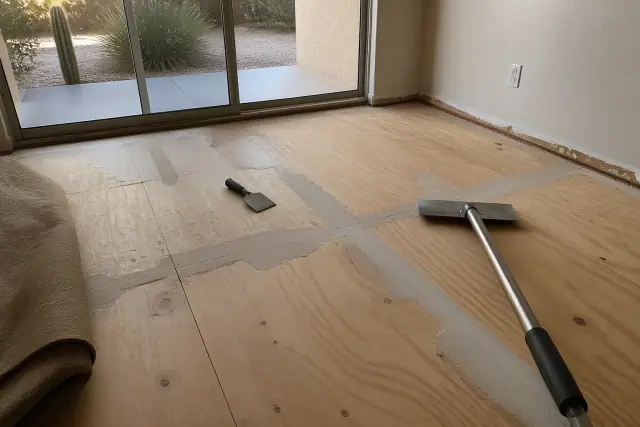
Technician prepping a wooden subfloor for carpet installation in Phoenix, AZ.

Before installation, we test slab moisture and check for cracks, uneven patches, and adhesive residue. When floor repair or replacement is needed, addressing it first prevents damage from telegraphing through the new carpet within months and helps protect manufacturer requirements tied to subfloor condition.

Request Estimate
Carpet Materials & Styles

Types of Carpet Options

Fiber, construction, color, and padding should be chosen together. We compare each option against room traffic, direct desert sun, dust, pets or children, comfort preferences, maintenance expectations, and the project budget.

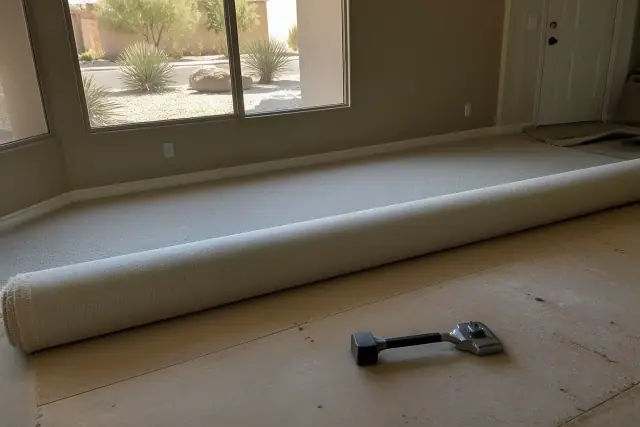
Plush nylon carpet installed over a subfloor in a Phoenix, AZ home with a carpet kicker tool nearby.

Nylon Carpet

Nylon is a durable residential choice for rooms where traffic and long-term wear matter. Nylon typically lasts roughly 10 to 15 years in normal residential use, depending on construction and maintenance.

  • Typical residential life of 10 to 15 years
  • Dense, tight-twist constructions for high-traffic rooms
  • Solution-dyed options that hold color under direct sun
  • Stain-resistant choices for households with kids or pets
  • Mid-grade nylon blends for a middle-range material budget
Request Estimate
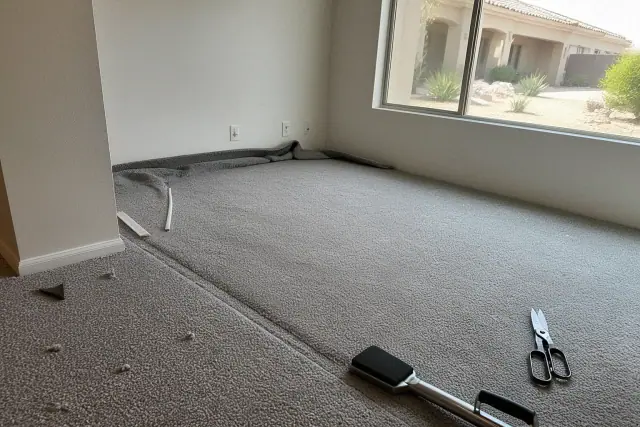
Polyester carpet installation with a knee kicker and shears in a residential living room in Phoenix, AZ.

Polyester Carpet

Polyester often sits at the more budget-conscious end of carpet selection. Its typical residential planning range is about 7 to 10 years, so traffic, padding, and direct sun exposure should be weighed carefully.

  • Typical residential life of 7 to 10 years
  • Builder-grade choices at the lower end of material pricing
  • Useful for matching a defined project budget
  • Available for lower-traffic residential rooms
  • Best evaluated with padding and sunlight exposure together
Request Estimate
Premium wool and high-twist nylon carpet installed over a wooden subfloor in a Phoenix, AZ home.

Premium Wool & High-Twist Nylon

Premium wool and high-twist nylon saxony sit at the upper end of the available material range. We compare them with the room's traffic, desired feel, construction, and lighting before a specialty roll is ordered.

  • Premium material tier
  • High-twist nylon saxony construction
  • Wool carpet options
  • Face weight and twist level reviewed before ordering
  • Full-size samples viewed under the room's natural light
Request Estimate
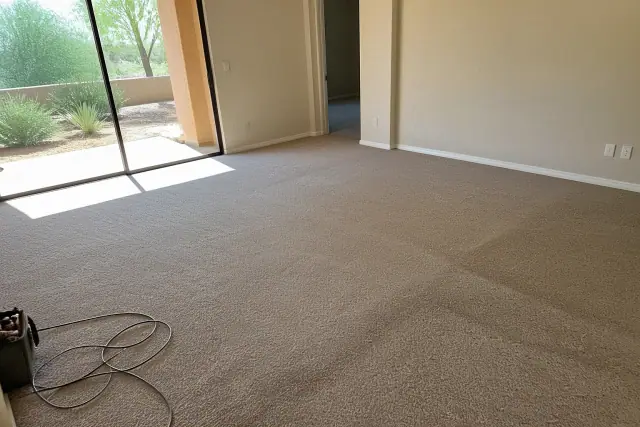
Freshly installed plush and textured carpet in a living room with desert landscaping visible in Phoenix, AZ.

Plush, Frieze & Textured Carpet

Softer, higher-pile plush and frieze styles are well suited to bedrooms and other lower-traffic spaces. Current Phoenix preferences favor warm neutrals and textured loop or frieze constructions that help disguise dust and foot traffic between cleanings.

  • Soft feel for bedrooms
  • Higher-pile plush options
  • Textured frieze construction
  • Warm neutral color choices
  • Texture that helps conceal everyday traffic
Request Estimate
Carpet tiles being installed in a sunny Phoenix, AZ workspace during an interior renovation.

Carpet Tile & Commercial Carpet

Commercial flooring requires materials selected for continuous foot traffic and practical maintenance. Carpet tile is especially useful in offices and fitting areas because individual pieces can be replaced in worn zones without removing the entire floor.

  • Replaceable tiles for high-wear zones
  • Solution-dyed commercial fibers
  • Heavier face weights for sustained traffic
  • Layouts coordinated with tile or luxury vinyl plank
  • Maintenance plans that support documented warranty terms
Request Estimate
Finding Your Right Fit

Choosing the Right Carpet Installation Approach

The right plan starts with how each room is used, not a generic product recommendation. During an in-home consultation, we compare carpet fibers, construction, padding, stain resistance, natural light, subfloor conditions, maintenance, budget, and timing so you can make an informed choice.

CRI-Aligned Installation Standards

Our installers follow Carpet and Rug Institute installation standards, including CRI 105 for residential and commercial work. Full-span power stretching, taped padding seams, and heat-activated carpet seam tape create proper tension and a more stable finished floor.

Phoenix Slab & Climate Knowledge

Phoenix slabs, low humidity, intense sunlight, and desert dust all affect carpet planning. We test moisture, select appropriate underlayment, consider pile direction and sun exposure, and avoid covering cracks or residue that can undermine the finished installation.

Transparent, Itemized Estimates

Projects are quoted by measured square footage rather than room count, including odd-shaped spaces. Estimates itemize carpet, padding, labor, removal, furniture moving, stair work, seam requirements, and any subfloor repair so quote comparisons are based on the same scope.

What Sets Us Apart

Why Choose Us for Carpet Installation?

Phoenix Expert Flooring is a licensed and insured carpet installer that follows Arizona Registrar of Contractors requirements and obtains appropriate permits when a project requires them. We compete on installation quality, honest material grading, clear scheduling, and thorough preparation rather than positioning ourselves as the Valley's cheapest option.

Get a Free In-Home Estimate

Wrinkles & Carpet Bunching

Ripples near doorways or furniture paths often develop when carpet was tensioned with a knee kicker instead of a power stretcher. Under-tensioned carpet can wrinkle within a year or two, then wear faster at the folds and create a trip hazard.

Moisture Beneath Slab-Installed Carpet

Elevated moisture readings in a concrete slab can affect adhesive, padding, and carpet backing and may void manufacturer warranty terms. Moisture testing and an appropriate barrier strategy should happen before installation, not after a floor problem appears.

Cracks & Uneven Subfloors

Cracks, uneven patches, old adhesive residue, water staining, or pest damage can stay hidden until old carpet is removed. Installing over those conditions can let damage telegraph through the new surface within months, so repairs should be handled during preparation.

Matting & Crushed Carpet Pile

Pile that no longer bounces back after vacuuming is a common replacement signal. Residential carpet has a functional lifespan of roughly 5 to 15 years depending on fiber, traffic, and maintenance, and Phoenix dust can push neglected carpet toward the shorter end.

Separating or Visible Seams

Seams can peak, gap, or wear early when pile direction is mismatched, the joint is not properly sealed, or placement falls directly in a busy walkway. Planning the seam before cutting and sealing it with heat-activated tape helps create a less visible, more durable joint.

Persistent Odors & Delamination

Odors that remain after cleaning and delamination where carpet backing separates from the fibers usually point toward replacement rather than a surface repair. Removing the carpet and pad also allows the exposed subfloor to be checked before new flooring is installed.

How It Works

Our Carpet Installation Process

A durable carpet floor comes from completing each step in order. We measure and assess the room, plan materials and seams, prepare the surface, install padding and carpet, power-stretch the field, and review the completed work.

01.

In-Home Measure & Consultation

We measure the full space and note doorway transitions, closet returns, HVAC vents, and floor outlets. Full-size samples are compared with existing trim, wall color, and actual room lighting.

02.

Room & Subfloor Assessment

Furniture needs, baseboards, and the exposed or accessible subfloor are reviewed before installation. For concrete slabs, we check moisture readings as well as cracks, uneven patches, and old adhesive.

03.

Material & Budget Planning

We compare fiber type, face weight, twist, padding density, stain resistance, and room traffic, then measure the project by square footage. The estimate separates materials, labor, removal, stairs, furniture moving, and repair needs.

04.

Removal & Surface Preparation

Old carpet and pad are pulled up, staples and worn tack strip are removed, and debris is hauled away when removal is part of the scope. Any water staining, cracks, pest damage, or uneven areas are addressed before the new floor is covered.

05.

Padding, Tack Strip & Seam Work

Tack strip is installed around the room perimeter, padding is secured with taped seams, and the carpet layout is cut with pile direction and traffic patterns in mind. Carpet seams are joined with heat-activated seam tape.

06.

Power Stretching & Final Cleanup

The carpet is tensioned across the full span with a power stretcher, tucked at the edges, trimmed at transitions, and checked before cleanup. For in-stock selections, many deadline-driven projects can be completed within about 5 business days of order confirmation, while custom materials take longer.

Start With Samples

Schedule a Carpet Installation Consultation

Request a free in-home estimate to see carpet samples in your own lighting, review subfloor conditions, and receive a measured project price. If you are planning a move-in or property turnover, ask which in-stock choices qualify for expedited installation.

Carpet Installation Help

Phoenix Carpet Installation FAQs

Get practical answers about carpet costs, materials, preparation, installation time, stretching, and service coverage in Phoenix. For a room-specific recommendation, schedule an in-home measurement and sample review.

Call Our Flooring Team

Usually not. Installers can tuck carpet edges beneath existing baseboards along the tack strip line, but unusually low trim or subfloor repair that requires wall-line access may make removal necessary. Any baseboard work should be discussed during the in-home consultation.

Common mistakes include using a knee kicker without a power stretcher, skipping moisture testing on slab subfloors, mismatching pile direction at seams, installing over compressed padding, and placing seams in busy walkways. These shortcuts can lead to wrinkles, visible joints, and early wear.

Ask about Arizona Registrar of Contractors licensing, liability insurance, included padding, seam placement, slab moisture testing, and an itemized quote for material, labor, removal, and repairs. Also ask what the labor warranty covers for seams, restretches, and stairwork; coverage varies, and some programs include lifetime labor coverage.

A 12x12 room is about 16 square yards, or 144 square feet. At typical Arizona mid-grade pricing of roughly $4.00 to $6.25 per square foot installed, many homeowners land between $600 and $900 with padding and standard labor; the broader planning range is roughly $600 to $1,000 depending on carpet, padding, removal, and subfloor work.

Carpet remains useful in bedrooms and living spaces where comfort and sound dampening matter. Current preferences favor warm neutral colors and textured loop or frieze construction, while many Phoenix homes mix carpet with luxury vinyl plank or tile in wet and high-traffic areas.

A single average-sized room typically takes a few hours once materials are on site, while a whole-house residential job usually takes one full day. Larger commercial work, removal, furniture moving, subfloor repair, and custom orders extend the schedule; in-stock express projects may be completed within about 5 business days of order confirmation.

Mid-grade carpet with padding runs roughly $4.00 to $6.25 per square foot, averaging around $5.13 installed. Labor alone is typically $1 to $2 per square foot, while premium or specialty carpet with full-service installation can run $7 to $10 or more; removal, repairs, furniture, stairs, and irregular seams also affect the total.

Nylon has a typical residential range of 10 to 15 years, while polyester is about 7 to 10 years under normal use. Actual wear depends on traffic, construction, padding, maintenance, dust, and direct desert sun.

Most Phoenix subdivisions use slab-on-grade construction, and elevated slab moisture can affect adhesive, padding, carpet backing, and manufacturer warranty terms. Testing before installation allows the installer to choose an appropriate moisture-barrier strategy and address the floor before materials are covered.

Padding density affects comfort and how well the pad supports the carpet backing. Moving from a basic 6-pound pad to an 8-pound rebond pad can improve feel and extend carpet life without the larger price jump of changing carpet grade.

Often, yes, when the carpet and backing are still serviceable. Power stretching at the first sign of looseness can restore tension, but persistent odors, delamination, severely worn pile, or failed padding may make replacement the better choice.

Commercial carpet should be rated for continuous foot traffic, with solution-dyed fibers and heavier face weights where appropriate. Carpet tile is practical in high-wear areas because individual tiles can be replaced, and documented professional cleaning may be required to protect commercial warranty terms.

Phoenix Expert Flooring installs carpet throughout Phoenix and the surrounding Valley cities of Scottsdale, Tempe, Mesa, Glendale, and Chandler. Projects range from residential rooms and rental turnovers to office and retail flooring.