Proudly serving Phoenix, Scottsdale, Glendale, Tempe, Mesa, Chandler & surrounding areasCall or Text 24/7: 480-264-9683
Aerial drone view of a suburban residential neighborhood with desert landscaping and saguaro cacti in Phoenix, AZ.

Commercial Flooring Installation & Facility Upgrades in Phoenix, AZ

Phoenix Expert Flooring installs and repairs commercial flooring for offices, retail spaces, restaurants, warehouses, and medical facilities across Phoenix and Maricopa County. Our services include luxury vinyl plank and LVT, tile, hardwood, laminate, carpet, epoxy, floor repair and replacement, and hardwood refinishing. We also handle material selection, old-floor removal, subfloor preparation, leveling, and final installation under one roof. Every recommendation is matched to traffic, moisture exposure, business use, and design goals.

Commercial floors across the more than 517.9 square miles of the Salt River Valley face monsoon dust, intense UV through storefront glass, and continuous foot or equipment traffic. Phoenix summer surface temperatures can rise above 110 degrees, so material stability, acclimation, and slab conditions matter. We moisture-test concrete subfloors and plan materials for Arizona's heat and low humidity before installation begins. As a licensed and insured contractor, we coordinate permits through the City of Phoenix and schedule around business hours to limit downtime.

Our crews use commercial-grade materials and methods aligned with the Tile Council of North America, National Wood Flooring Association, Carpet and Rug Institute, and manufacturer requirements, then complete a final walkthrough before closeout.

Phoenix Expert Flooring provides commercial flooring installation and repair in Phoenix, Scottsdale, Tempe, Mesa, Chandler, and Glendale.

★ ★ ★ ★ ★4.9/5 Average Rating · 20+ Years of Experience · Thousands of Customers Helped · Licensed & Insured · Residential & Commercial

Commercial Flooring Options

What Is Commercial Flooring?

Commercial flooring is selected and installed for business environments where wear, maintenance, safety, and downtime carry different consequences than in a home. Offices, retail spaces, restaurants, warehouses, and medical facilities each require a floor matched to their traffic and operations.

Phoenix properties add intense sun, monsoon dust, low humidity, and common slab-on-grade construction to the decision. Retail spaces along Camelback Road or in Desert Ridge may see thousands of footsteps daily, while warehouses near Sky Harbor International Airport must account for forklifts and pallet loads.

A complete project covers site evaluation, material selection, old-floor removal, concrete testing, leveling, installation, transitions, and final inspection. Matching those steps to the chosen material helps prevent early failure and avoid unnecessary replacement.

Benefits of Commercial-Grade Flooring

Commercial-grade flooring gives Phoenix businesses a surface designed around actual traffic, cleaning, moisture, and operating demands. The right assembly can balance durability, safety, appearance, and life-cycle value without treating every room the same.

  • High-traffic materials suited to daily foot or equipment loads
  • Waterproof and moisture-resistant options for exposed areas
  • Scratch-resistant wear layers for retail and office use
  • Low-porosity tile for heat, dust, and routine cleaning
  • Chemical- and impact-resistant coatings for industrial bays
  • Carpet options that improve comfort and reduce office noise
  • Repairable tile, plank, and carpet sections where appropriate
  • Scheduling planned around business hours and phased reopening
Commercial Flooring Services

Commercial Flooring Services

From material selection through final inspection, Phoenix Expert Flooring manages commercial installation, repair, replacement, and refinishing for a wide range of business spaces. Each service is planned around the material, subfloor, traffic load, and operating schedule.

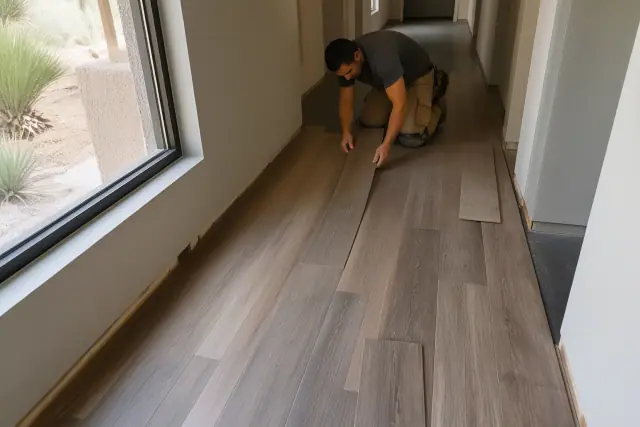
Luxury Vinyl Plank & LVT Installation

Contractor installing staggered luxury vinyl planks in a Phoenix, AZ commercial hallway with desert views.

Waterproof, scratch-resistant LVP and LVT can reproduce hardwood or stone looks with less maintenance. We use click-lock floating systems or full-spread adhesive according to traffic demands, always over a leveled and moisture-tested subfloor.

Request Estimate

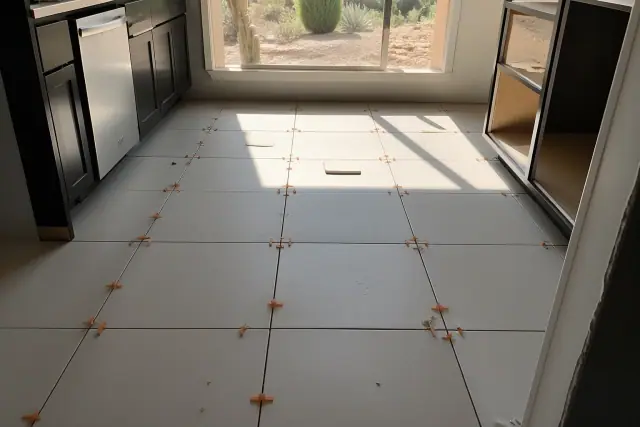
Ceramic & Porcelain Tile

Ceramic tile floor installation with spacers and dust in a kitchen in Phoenix, AZ, with desert views through a window.

Dense, low-porosity ceramic and porcelain tile withstand Phoenix heat, dust, and frequent cleaning. We dry-lay the pattern, install with commercial-grade thinset using Tile Council of North America methods, then grout and seal; slip-resistance selections can be matched to ANSI A137.1 and ADA guidance.

Request Estimate

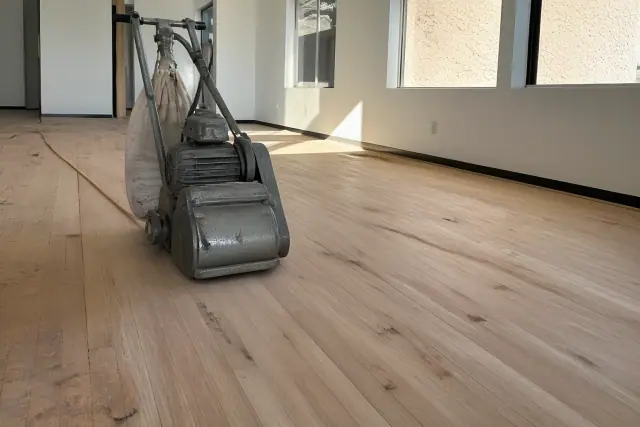
Hardwood Installation & Refinishing

Industrial drum sander smoothing raw oak planks during a hardwood flooring restoration project in Phoenix, AZ.

Commercial-grade hardwood gives law offices, boutiques, and hospitality spaces a premium finish that can handle rolling chairs and steady foot traffic. We acclimate wood on site for several days in Phoenix's arid climate, and worn floors can often be sanded and refinished multiple times instead of replaced.

Request Estimate

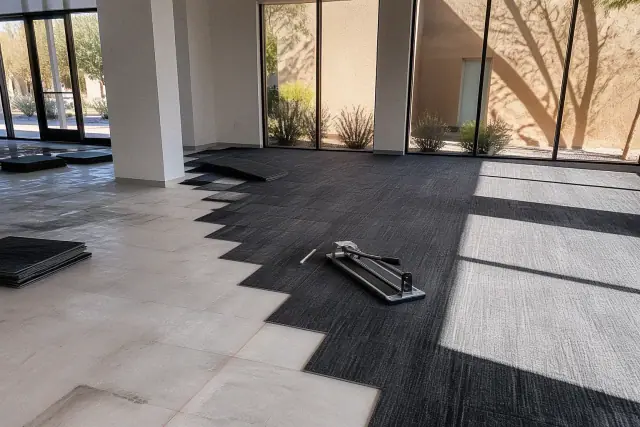
Commercial Carpet Installation

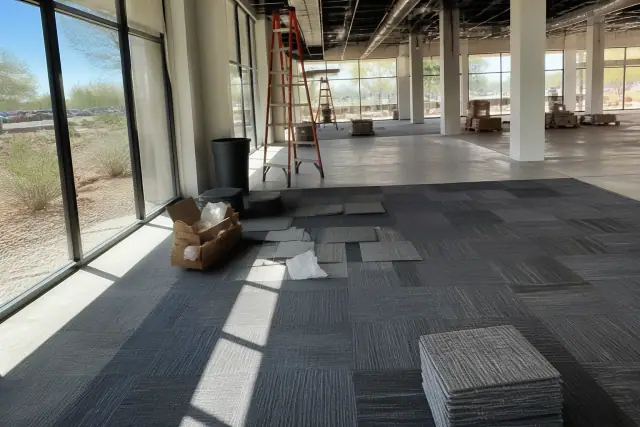
Commercial carpet tiles being installed in an office workspace in Phoenix, AZ.

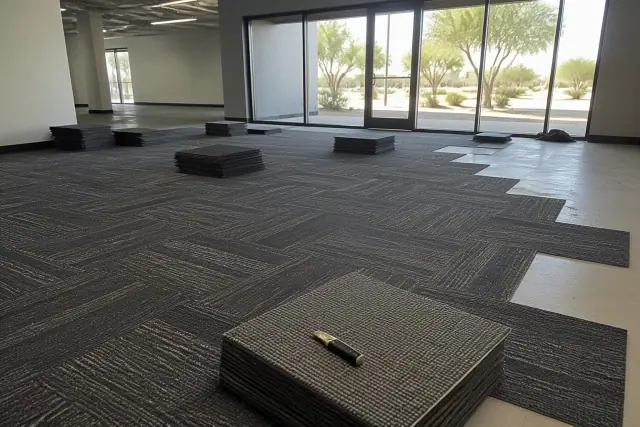
Carpet tile and broadloom bring comfort and noise reduction to offices and hospitality settings. Installation can use full-spread glue-down methods, and modular carpet tile gives property teams a practical path for addressing isolated wear in high-traffic areas.

Request Estimate

Epoxy & Concrete Coatings

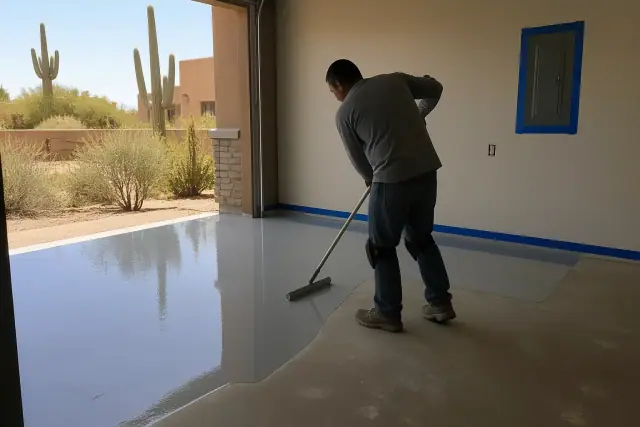
Contractor applying epoxy resin to a prepared concrete floor at a jobsite in Phoenix, AZ.

Standard epoxy suits light-duty warehouse and garage applications, while polyaspartic and urethane-topped systems handle heavier chemical and impact loads. Polished and decorative concrete provide additional durable options for industrial bays, showrooms, and retail spaces.

Request Estimate

Floor Repair & Replacement

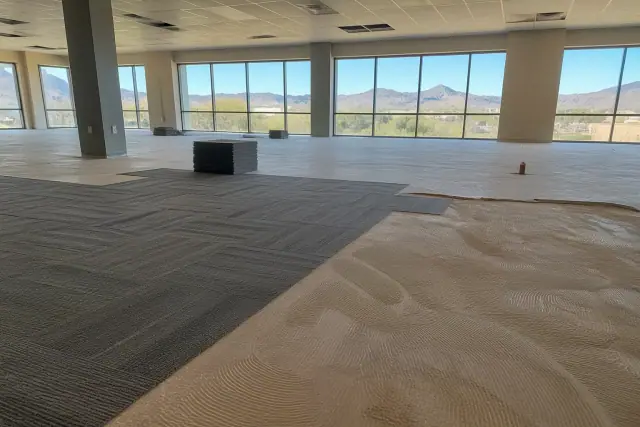
Commercial carpet tile installation during an office renovation with mountain views in Phoenix, AZ.

We assess UV fading, cracked grout, worn carpet, damaged planks, and uneven slabs before recommending a scope. When a spot repair to tile, plank, or carpet tile can hold up, it may avoid the cost and disruption of full replacement.

Request Estimate
Flooring by Property Type

Commercial Flooring by Application

The best commercial floor depends on how the space is used, what it must resist, and how easily it must be cleaned or repaired. These application-focused options help narrow the material conversation before the site assessment.

Contractor photo of carpet tile installation in a commercial showroom during an interior renovation in Phoenix, AZ.

Retail Stores & Showrooms

Retail floors need a clean presentation under steady traffic, storefront sun, tracked-in dust, and frequent cleaning. LVP, porcelain tile, and decorative concrete offer different balances of appearance, durability, and maintenance.

  • Scratch-resistant LVP wear layers
  • Low-porosity porcelain tile
  • Decorative concrete for an industrial-modern look
  • Material planning for storefront UV exposure
  • Layouts that keep open sightlines natural
Request Estimate
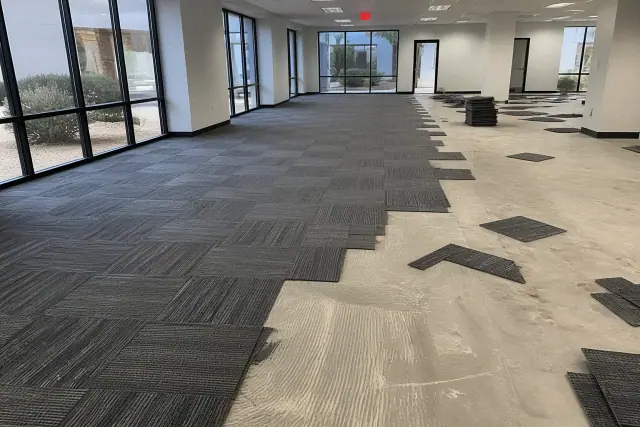
Installation of new carpet tiles in an open office workspace during a renovation in Phoenix, AZ.

Offices & Medical Facilities

Office and medical spaces often need quieter surfaces, easy-clean areas, smooth transitions, and installation phases that preserve access. Carpet, LVT, hardwood, and tile can be combined according to each room's traffic and maintenance needs.

  • Carpet tile or broadloom for comfort and sound control
  • LVT and LVP for durable, easy-care circulation areas
  • Commercial hardwood for premium client-facing rooms
  • Smooth transitions planned around ADA guidance
  • Phased work to support continued operations
Request Estimate
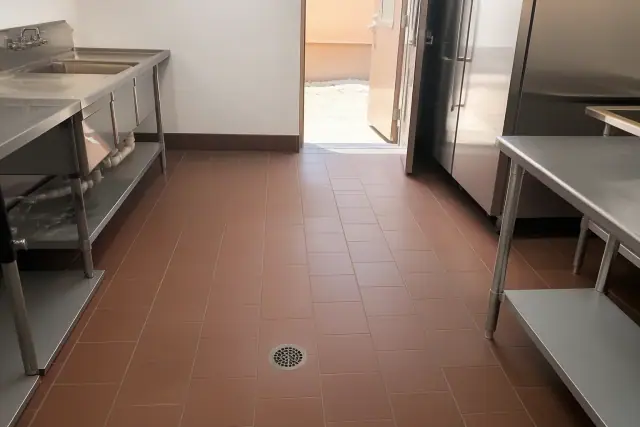
Commercial kitchen floor with sealed quarry tile, floor drain, and stainless steel equipment in Phoenix, AZ.

Restaurants & Commercial Kitchens

Dining and food-preparation areas require different surface priorities. Kitchens need nonporous, slip-resistant, chemical-resistant flooring with sealed seams or grout, while guest areas may prioritize design and comfort.

  • Sealed commercial-grade epoxy
  • Quarry tile for demanding kitchen areas
  • Certain rubber flooring systems
  • Slip-resistant ANSI A137.1 tile selections
  • Sealed grout lines and minimized seams
Request Estimate
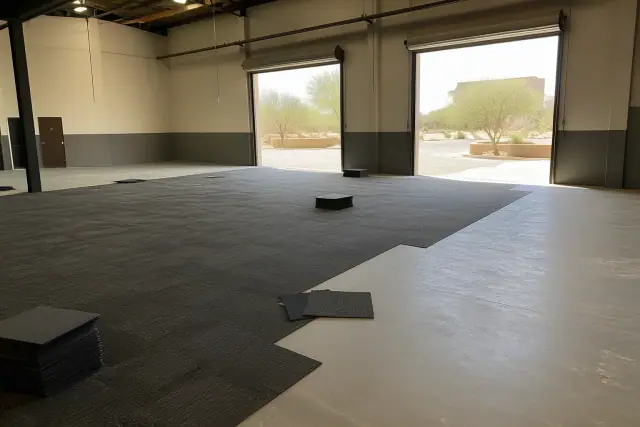
Carpet tile installation in an industrial warehouse workspace during a flooring renovation in Phoenix, AZ.

Warehouses & Industrial Bays

Warehouse floors near Sky Harbor International Airport and along the Loop 202 and Loop 101 logistics corridors must withstand forklifts, pallet loads, oil, solvents, and impact. Coating and concrete options are selected around the facility's actual equipment and chemical exposure.

  • Epoxy for light-duty warehouse applications
  • Polyaspartic and urethane-topped systems for heavier loads
  • Polished concrete for long-wearing service
  • Chemical resistance to oil and solvents
  • Impact resistance for forklifts and equipment traffic
Request Estimate
Carpet tile installation in a Phoenix, AZ workspace renovation with xeriscape landscaping visible through glass doors.

Hospitality Spaces & Boutiques

Hospitality spaces and boutiques can pair a premium visual finish with surfaces selected for rolling loads, foot traffic, comfort, and maintenance. Existing hardwood may also be a candidate for refinishing rather than removal.

  • Commercial-grade hardwood species and finishes
  • Carpet tile for comfort and noise reduction
  • Porcelain tile for low-porosity durability
  • LVP for scratch resistance and easier upkeep
  • Hardwood refinishing when the original material is sound
Request Estimate
Finding Your Right Fit

Choosing the Right Flooring Approach

Material choice starts with traffic, moisture, cleaning, safety, appearance, budget, and the condition of the subfloor. We compare those factors during the walkthrough, explain the relevant product specifications, and recommend an installation method suited to the space.

Arizona Climate Planning

Material recommendations and acclimation schedules account for Phoenix heat, intense sun, and low humidity. Concrete moisture testing and on-site hardwood acclimation help reduce avoidable movement after installation.

Standards-Aligned Installation

Crews follow material-specific methods aligned with industry organizations and product manufacturers. That includes the correct adhesives, fasteners, thinset, transitions, and surface-preparation steps for the selected floor.

Commercial-Site Coordination

We coordinate required City of Phoenix permits and plan work around business hours. Larger installations can be phased so completed areas reopen while work continues elsewhere.

Problems We Address

Commercial Flooring Problems We Solve

Visible surface damage may begin with sunlight, traffic, slab movement, moisture, or incomplete preparation below the finish. We evaluate the cause before deciding whether localized repair, subfloor correction, refinishing, or replacement is the durable response.

Request Site Assessment

UV Fading Near Storefronts

Direct sun through storefront glass can fade exposed flooring and create uneven color. Material choice and placement should account for the intensity and duration of that exposure.

Slab Moisture & pH

Moisture vapor or unsuitable pH in a concrete slab can interfere with adhesives and finishes. Testing before installation helps determine the preparation and flooring assembly required.

Uneven or Cracked Subfloors

High spots, cracks, and uneven slabs can telegraph through a finished floor or weaken its bond. Grinding, leveling compound, or partial slab repair may be needed before new material goes down.

Grout Cracking from Slab Movement

Movement in Salt River Valley slabs, including areas with expansive clay pockets, can contribute to cracked grout. The slab condition must be assessed before damaged tile areas are reset or replaced.

High-Traffic Carpet Wear

Lobby paths and office circulation zones can wear much faster than low-traffic areas. Carpet tile may allow targeted replacement when the surrounding installation remains serviceable.

Hardwood Gapping or Cupping

Phoenix's arid air can pull moisture from wood and contribute to gaps or cupping when material is not acclimated correctly. On-site conditioning and proper installation methods reduce that risk.

How It Works

Our Commercial Flooring Process

A commercial installation moves from assessment to preparation, material-specific work, and documented closeout. Each step is coordinated around the condition of the property and the way the business needs to operate during the project.

01.

On-Site Walkthrough

We walk the property, review business operations, inspect the existing flooring, and discuss the project timeline and budget.

02.

Measure & Plan

We measure square footage and map traffic patterns, ADA-related transitions, moisture exposure, design goals, and phased access needs.

03.

Test & Prepare the Subfloor

We test concrete for moisture vapor emission and pH, grind high spots, repair problem areas, and add self-leveling underlayment where needed.

04.

Select & Acclimate Materials

We match the surface to its use, then acclimate hardwood or other condition-sensitive materials before installation begins.

05.

Install to Material Specifications

Crews use manufacturer-approved adhesives, fasteners, thinset, or transition methods appropriate to the flooring selected.

06.

Inspect & Complete the Punch List

We check seams, transitions, finish quality, and punch-list items with you before the project is complete.

Plan Your Project

Schedule a Commercial Flooring Consultation

Discuss your property, operating schedule, material priorities, and subfloor concerns with Phoenix Expert Flooring. Request an estimate to start with a site-specific plan.

Commercial Flooring Help

Commercial Flooring FAQs

Get practical answers about Phoenix commercial flooring materials, costs, preparation, installation timing, repairs, and service coverage.

Call Our Experts

A commercial flooring contractor installs, repairs, and replaces flooring in offices, retail spaces, restaurants, warehouses, medical facilities, and other business properties. Phoenix Expert Flooring holds the appropriate Arizona Registrar of Contractors licensing, carries liability insurance for commercial job sites, coordinates applicable City of Phoenix permits, and follows material-specific installation standards.

The Rule of 3 is a layout guideline that avoids lining up plank or tile joints within roughly 3 inches of one another across three or more consecutive rows. It creates a more natural pattern and distributes structural stress more evenly, especially where open commercial floor plans expose long sightlines.

Options include luxury vinyl plank and LVT, ceramic and porcelain tile, carpet tile and broadloom, engineered and solid hardwood, laminate, epoxy, polished concrete, decorative concrete, and rubber flooring. The right category depends on traffic load, moisture and chemical exposure, cleaning, comfort, and design goals.

Commercial kitchens need nonporous, slip-resistant, chemical-resistant surfaces that satisfy local health-code and Maricopa County Environmental Services requirements. Quarry tile, sealed commercial-grade epoxy, and certain rubber systems are common choices because they resist grease, standing water, and equipment traffic; seams and grout must be minimized or fully sealed.

Midrange commercial projects in Phoenix generally run $10 to $13 per square foot including materials and labor, while labor alone averages $2 to $8 per square foot depending on material and subfloor condition. LVP installation generally falls between $5 and $10 per square foot, tile runs $8 to $20 per square foot, and laminate projects typically total $300 to $4,000 depending on project size. Phoenix Expert Flooring provides itemized estimates during a free flooring consultation.

A straightforward LVP or laminate installation in a small office suite might take 2 to 4 days. A large retail or warehouse floor with coating cure time can take 1 to 2 weeks for preparation, curing, and inspection, while rush or same-day service may be available for smaller repair jobs.

LVP or LVT, porcelain tile, epoxy, and polished concrete all suit demanding traffic when correctly specified. Carpet tile can be a better fit where office comfort and noise reduction matter, so the final choice should follow an assessment of foot traffic, equipment, maintenance, and moisture.

Yes. Phoenix Expert Flooring tests concrete slabs for moisture vapor emission and pH, then evaluates cracks, high spots, and uneven areas. Preparation may include grinding, leveling compound, or partial slab repair before the finish floor is installed.

Extreme heat, low humidity, intense storefront sun, and slab-on-grade construction affect material stability and adhesive performance. Moisture-resistant LVT or LVP may suit exposed areas, while hardwood needs on-site acclimation to reduce the risk of gaps and cupping.

Most epoxy systems cure for light foot traffic within 24 hours. Full cure for heavy equipment typically takes 5 to 7 days after surface preparation, primer, base coats, broadcast media when used, and the topcoat.

With proper maintenance, carpet tile typically lasts 8 to 10 years, LVT lasts 10 to 20 years, commercial tile lasts up to 25 years, and polished concrete can last 30 years or more. Actual service life depends on traffic, preparation, installation quality, cleaning, and the selected material.

Often, yes. Tile, plank, or carpet tile sections may be repaired when the surrounding floor and subfloor remain sound; worn hardwood may also be sanded and refinished. Phoenix Expert Flooring evaluates whether a spot repair will hold up or full replacement offers better long-term value.

Phoenix Expert Flooring provides commercial and residential flooring installation throughout Phoenix, Scottsdale, Tempe, Mesa, Chandler, and Glendale. Commercial projects are planned around each property's material, subfloor, traffic, and scheduling requirements.