Proudly serving Phoenix, Scottsdale, Glendale, Tempe, Mesa, Chandler & surrounding areasCall or Text 24/7: 480-264-9683
Aerial drone view of a suburban residential neighborhood with desert landscaping and saguaro cacti in Phoenix, AZ.

Flooring Installation & Subfloor Preparation in Phoenix, AZ

Phoenix Expert Flooring provides residential and commercial flooring installation across Phoenix, AZ, with hardwood, luxury vinyl plank, and tile among our highest-demand options. Our crews also install laminate, carpet, and epoxy systems for homes and commercial properties. We coordinate removal, subfloor preparation, underlayment, installation, and finish work as one project. Every quote includes disposal of the old flooring.

Phoenix slabs can exceed 150 degrees, while dry winters and July and August monsoon humidity put flooring through sharp thermal and moisture swings. Those conditions can crack grout, cup hardwood, curl vinyl, and expose weaknesses in an unprepared subfloor. We begin with moisture testing and substrate preparation, then install to manufacturer standards using methods matched to the material and foundation. As a family-owned, licensed, and insured contractor, the person measuring your rooms remains accountable for the installation crew.

Request a free, itemized estimate that separates demolition, preparation, materials, and installation labor. Same-day and quick-turnaround installation is available for smaller rooms once materials are on site.

Phoenix Expert Flooring provides flooring installation throughout Phoenix, Scottsdale, Tempe, Mesa, Glendale, Chandler, and the surrounding Maricopa County metro.

★ ★ ★ ★ ★4.9/5 Average Rating · 20+ Years of Experience · Thousands of Customers Helped · Licensed & Insured · Residential & Commercial

Phoenix Flooring Options & Benefits

What Is Professional Flooring Installation?

Professional flooring installation coordinates removal, subfloor preparation, underlayment, layout, installation, and finish work around the selected material and the property's foundation. The method may be nail-down, glue-down, or floating for plank floors, while tile requires properly rated setting materials and curing before grout.

Phoenix properties do not all present the same conditions. A slab-on-grade ranch in Sunnyslope differs from a two-story Ahwatukee home with a crawlspace, while a 1950s Coronado house may conceal original hardwood or asbestos tile that needs testing before removal.

Typical Phoenix flooring installation costs run $5 to $13 per square foot for materials and labor. Premium products and complex layouts commonly run $12 to $15 per square foot, with the final figure shaped by room size, material grade, removal, moisture control, and leveling.

Benefits of Professional Flooring Installation

A coordinated installation protects both the finished surface and the work beneath it. Material selection, moisture control, accurate layout, and clean finishing help the floor perform in Phoenix homes and commercial spaces.

  • Hardwood, LVP, tile, laminate, carpet, epoxy, and concrete options
  • Material recommendations matched to slab, crawlspace, heat, and humidity conditions
  • Subfloor preparation and moisture testing before installation
  • Old-floor removal, debris disposal, underlayment, and finish work coordinated together
  • Kitchen, bathroom, bedroom, living-room, and whole-home installations
  • Commercial flooring for offices, warehouses, and other high-traffic properties
  • Free estimates with itemized demolition, preparation, material, and labor pricing
  • Quick-turnaround scheduling for smaller rooms when materials are ready
Flooring Services

Phoenix Flooring Installation Services

Choose installation and restoration services around the room, traffic level, foundation, and desired finish. Each project includes the preparation and installation method appropriate for the selected floor rather than a one-method-fits-all approach.

Hardwood Flooring Installation

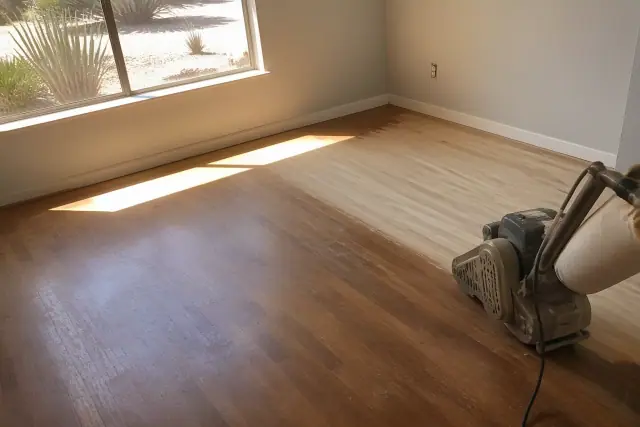
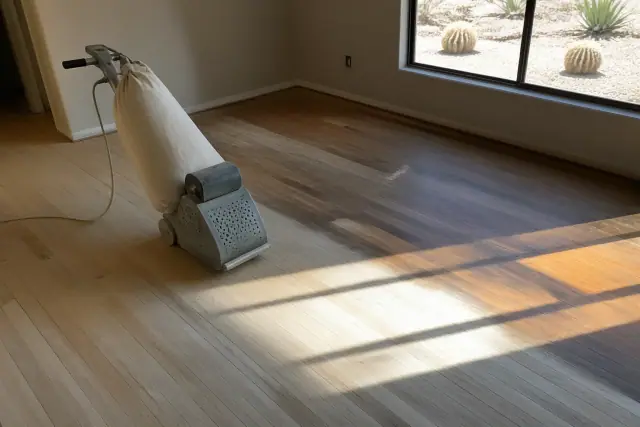
Industrial sander smoothing hardwood planks during a floor restoration in a Phoenix, AZ home.

We install engineered and solid hardwood with nail-down, glue-down, or floating methods selected for the subfloor and product. Wood acclimates on site for at least 72 hours, and slab moisture can be checked with calcium chloride or an in-situ probe test under ASTM F2170 before installation.

Request Estimate

Luxury Vinyl Plank Installation

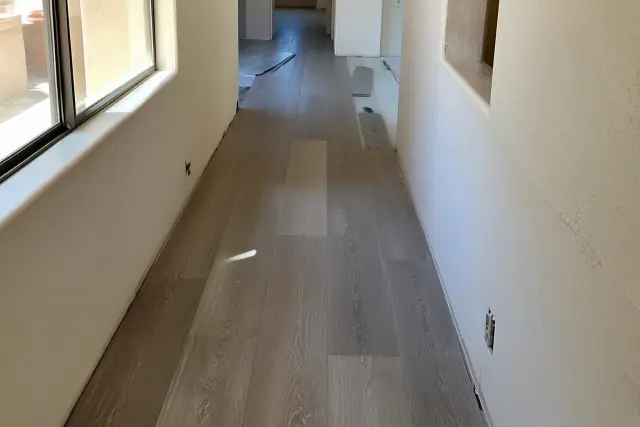
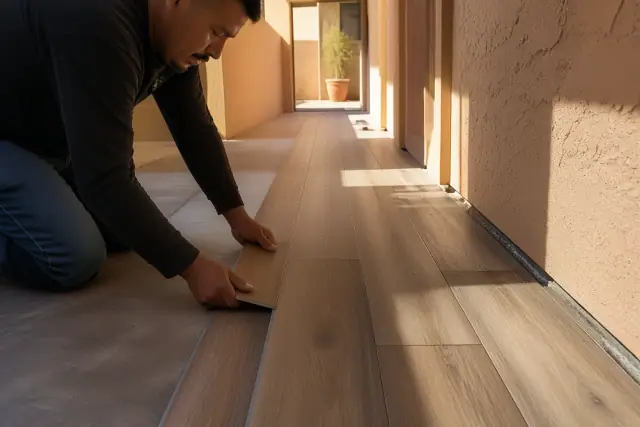
Luxury vinyl plank flooring being installed in a staggered pattern in a hallway in Phoenix, AZ.

Waterproof, scratch-resistant LVP suits kitchens, entries, rental properties, pet-friendly rooms, and other high-traffic areas. Click-lock planks float over a prepared subfloor with vapor-barrier underlayment on concrete, allowing the floor to move through temperature changes without buckling.

Request Estimate

Tile Flooring Installation

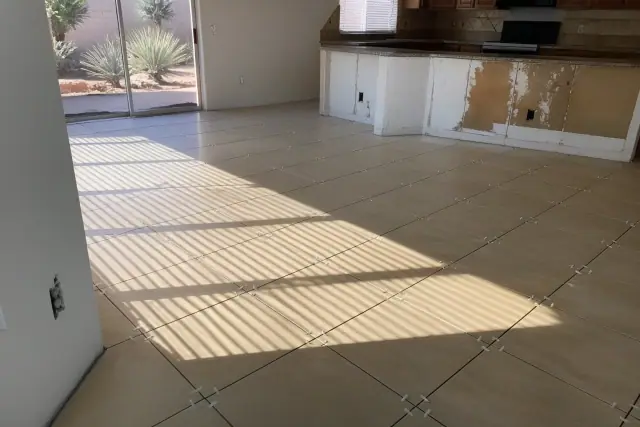
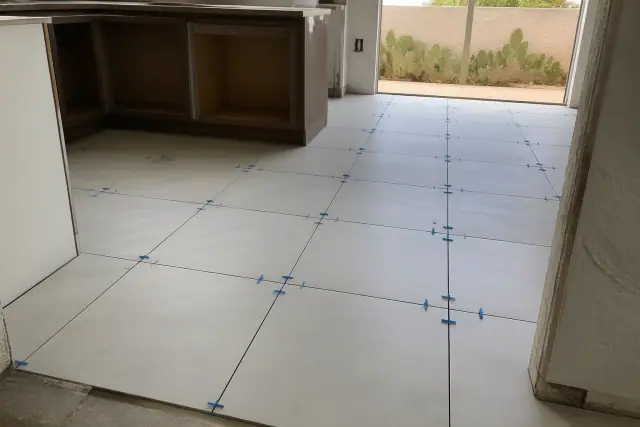
Ceramic tile flooring installation with spacers on a kitchen floor in Phoenix, AZ.

We install ceramic, porcelain, natural-stone, and glass tile with attention to substrate flatness, consistent grout lines, curing, and sealing. Porcelain is a strong fit for Phoenix thermal cycling, while ceramic remains practical for lower-traffic bathrooms and backsplashes.

Request Estimate

Laminate Flooring Installation

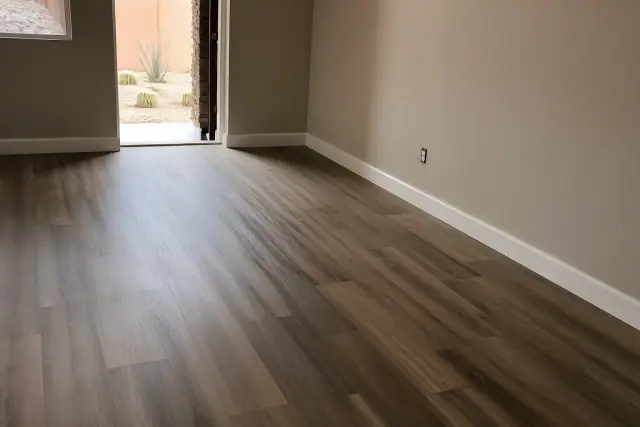
Laminate flooring installation with finished baseboards in a Phoenix, AZ basement.

Laminate provides wood- or stone-look visuals for bedrooms, offices, sunrooms, and secondary living areas. A leveled base, foam or cork underlayment, acclimation, and properly locked joints help the floating floor resist movement and premature seam failure.

Request Estimate

Carpet Installation

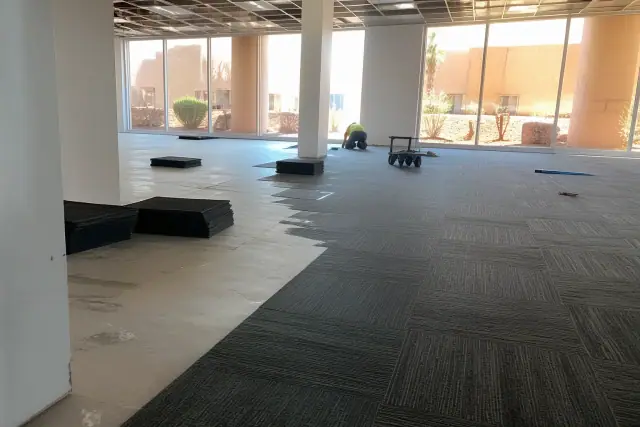
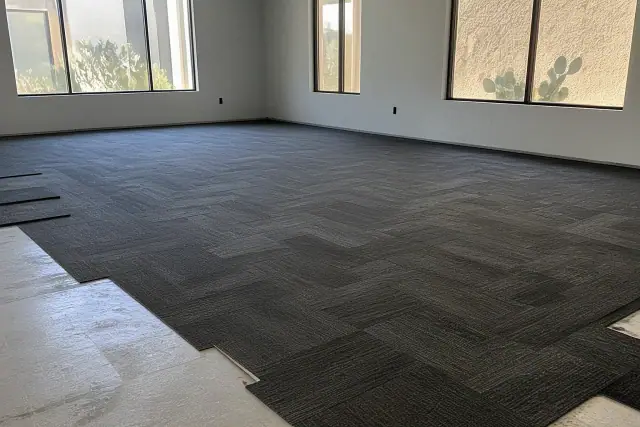
Worker installing carpet tiles during an office renovation in Phoenix, AZ.

Stain-resistant nylon and polyester blends handle desert dust, while low-pile carpet helps limit matting in busy hallways and stairs. We use a power stretcher, place seams away from primary traffic paths, and set tack strip flush to the walls for a clean edge.

Request Estimate

Floor Repair, Refinishing & Replacement

Industrial sander smoothing hardwood bedroom floors during a restoration project in Phoenix, AZ.

Our restoration work covers cracked tile, water-damaged flooring, scratched surfaces, hardwood refinishing, buffing, polishing, and full replacement. We match existing materials when possible, recommend partial replacement when dye lots no longer align, and include removal, leveling, underlayment, and disposal when replacement is the sounder choice.

Request Estimate
Flooring Material Options

Types of Flooring Options

The right floor balances appearance, budget, traffic, maintenance, and Phoenix climate exposure. These comparisons keep material performance and installation requirements visible before a product is selected.

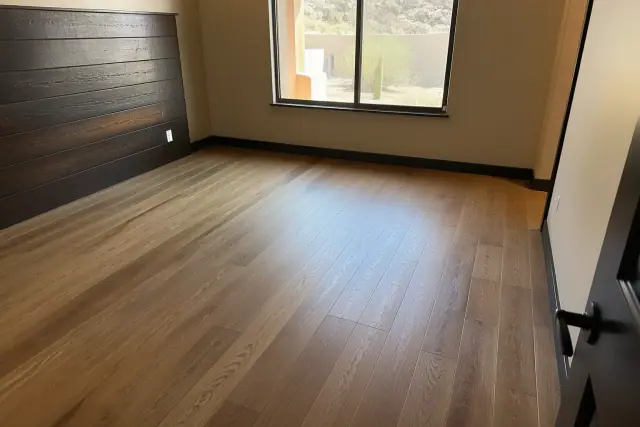
Installed engineered hardwood flooring in a Phoenix, AZ bedroom with a view of desert landscaping through the window.

Engineered & Solid Hardwood

Engineered hardwood's layered core is more dimensionally stable on Phoenix slabs, while solid hardwood works well over raised wood subfloors and offers more refinishing potential.

  • Hardwood materials typically run $5 to $10 per square foot
  • Installation labor generally adds $3 to $7 per square foot
  • Leveling and subfloor preparation may add $1 to $3 per square foot
  • A 300-square-foot room may require $1,500 to $3,000 in materials plus $900 to $2,100 in labor
  • Properly maintained hardwood can last 25 to 100 years; on-site sanding and finishing can add two to three days
Request Estimate
Contractor installing luxury vinyl plank flooring in a narrow corridor in Phoenix, AZ.

Luxury Vinyl Plank & Laminate

Both are floating-floor options with convincing wood and stone visuals, but LVP emphasizes water and scratch resistance while laminate offers value and strong fade resistance in bright rooms.

  • LVP materials typically cost $2 to $3 per square foot
  • Installed LVP commonly runs $5 to $10 per square foot with underlayment and labor
  • Laminate installation typically runs $3 to $6 per square foot
  • Quality laminate can last 15 to 25 years with suitable care
  • Many LVP rooms and 1,000-square-foot laminate projects finish in one to two days after preparation
Request Estimate
Ceramic tile flooring installation with plastic spacers on a kitchen floor in Phoenix, AZ, with cacti visible outside.

Porcelain & Ceramic Tile

Porcelain's density and low absorption suit Phoenix heat exposure, while ceramic offers a budget-conscious surface for lower-traffic rooms and wall applications.

  • Porcelain absorbs under 0.5% of water under ASTM C373
  • Ceramic and porcelain installation typically runs $7 to $14 per square foot
  • ANSI A118-rated thinset or mortar supports a standards-based tile installation
  • Large-format tile needs a flatter substrate even though it reduces grout lines
  • Grout in high-moisture rooms should generally be resealed every 12 to 18 months
Request Estimate
Carpet tiles and padding being installed in a Phoenix, AZ office workspace with views of cacti through the windows.

Carpet & Padding

Carpet adds softness and sound absorption, with pile, fiber, and padding choices determining comfort, stain resistance, and performance in busy rooms.

  • Basic carpet with padding generally costs $3 to $7 per square foot installed
  • A 1,000-square-foot home commonly falls between $3,000 and $7,000
  • Nylon and polyester blends resist stains and desert dust
  • Low-pile options resist matting in hallways and on stairs
  • Power stretching helps prevent rippling that can appear within a year of poor installation
Request Estimate
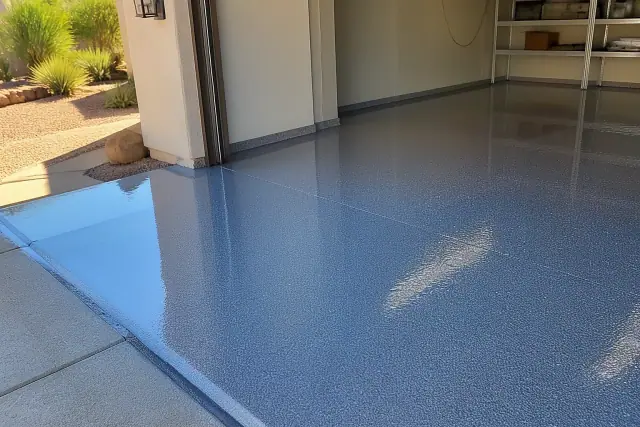
High-gloss epoxy resin being applied to a concrete garage floor at a jobsite in Phoenix, AZ.

Epoxy & Polished Concrete

Epoxy and polished concrete are climate-smart choices for garages, patios, warehouses, and modern commercial or residential interiors.

  • Epoxy resists oil, chemical exposure, and heat cycling
  • Surface grinding or acid etching prepares concrete for coating
  • Primer, epoxy base, and an optional UV-stable topcoat form the coating system
  • UV-stable protection helps limit ambering where sunlight reaches the floor
  • Sealed and polished concrete offers a lower-cost alternative when a full epoxy system is unnecessary
Request Estimate
Finding Your Right Fit

Choosing Flooring for Your Phoenix Property

Compare each room's moisture exposure, sunlight, traffic, pets, foundation, maintenance needs, and budget before choosing a surface. Porcelain tile, LVP, and engineered hardwood generally handle Valley temperature swings better than solid hardwood or standard laminate on concrete slabs, while sealed concrete is practical for garages and commercial settings.

Moisture Testing & Subfloor Preparation

Testing and preparation come before the visible floor. We assess slab moisture, substrate flatness, damage, and leveling needs so the selected adhesive, vapor retarder, underlayment, or installation method has a sound base.

Standards-Based Installation

Crews follow manufacturer installation standards, National Wood Flooring Association guidance for wood products, and appropriate ANSI A118 setting materials for tile. Phoenix Expert Flooring also maintains the licensing and insurance required by the Arizona Registrar of Contractors for flooring work.

Family-Owned Accountability

Phoenix Expert Flooring is a family-owned contractor rather than a franchise call center. The person measuring your rooms remains accountable for the crew doing the work, and the itemized estimate makes removal, preparation, materials, and labor easier to review.

What Sets Us Apart

Why Choose Us for Flooring Installation?

Our process joins local climate knowledge with material-specific preparation and installation. From Encanto-Palmcroft bungalows and Desert Ridge homes to Camelback Corridor offices and warehouse floors near Sky Harbor, we match the flooring method to the property rather than forcing every project into the same template.

Get a Free Estimate

Slab Moisture

Concrete moisture vapor can weaken adhesives, swell susceptible materials, and void product warranties when the required barrier is skipped. Moisture testing and a compatible vapor retarder or underlayment address the condition before the finished floor conceals it.

Thermal Expansion & Humidity Swings

Temperature differences between air-conditioned interiors and 110-plus-degree exteriors, followed by monsoon humidity, can make planks expand, contract, gap, cup, or buckle. Acclimation, perimeter expansion space, and the right construction for the foundation help manage that movement.

Uneven Subfloors

Low spots and high areas can stress click-lock joints, create hollow tile, and make large-format surfaces visibly uneven. Leveling and flatness checks create the consistent plane required by the chosen product.

Cracked Tile & Slab Movement

Cracked tile can trace back to slab movement, an uneven base, or improper original installation. We replace affected pieces and match existing material when possible, or explain when dye-lot differences make a partial replacement the cleaner choice.

Cupped, Scratched, or Water-Damaged Wood

Dry air, plumbing leaks, slab moisture, and surface wear can leave hardwood cupped, scratched, or dull. Depending on the damage, repair, buffing, polishing, or polyurethane refinishing may restore the floor; many solid hardwood floors can be refinished three to five times.

Curling Vinyl & Rippling Carpet

Vinyl can curl when heat, moisture, or poor substrate preparation undermines the installation, while carpet can ripple when it is not stretched correctly. Proper underlayment, stable seams, and power stretching target the cause instead of hiding the symptom.

How It Works

Our Flooring Installation Process

Each project moves from measurement and evaluation through preparation, layout, installation, and finish work. The exact method changes with the material, subfloor, room, and existing-floor conditions.

01.

Measure & Build the Estimate

We measure the rooms, review how each space is used, and discuss material and scheduling priorities. The free written estimate separates demolition, preparation, materials, underlayment, installation labor, and disposal.

02.

Inspect the Existing Floor

The existing surface and foundation are checked for moisture, movement, damage, and flatness. Older covered floors that may contain asbestos tile need appropriate testing before removal, while wood work may call for calcium chloride or in-situ slab testing under ASTM F2170.

03.

Prepare the Subfloor

We remove the old surface, dispose of debris, level the base, and complete needed repairs. Vapor barriers, vapor retarders, foam or cork underlayment, and tile setting materials are selected around the product and substrate.

04.

Acclimate & Plan the Layout

Wood remains on site for at least 72 hours before installation, and other products follow their manufacturer acclimation requirements. Plank layouts use the 1/3 rule, offsetting adjacent end joints by at least one-third of a plank length while accounting for walls, transitions, and the room's visual direction.

05.

Install the Selected Flooring

Crews nail, glue, float, stretch, or set the flooring according to the material and subfloor. Expansion gaps, vapor control, consistent grout lines, seam placement, curing, and product-specific standards are handled as part of the installation.

06.

Complete Finish Work & Cleanup

Finish work may include grouting and sealing tile, sanding and coating wood, trimming edges, buffing, or polishing. Old flooring and job debris are removed so the project closes with the new surface ready for its material-specific cure and care instructions.

Plan Your Project

Schedule a Flooring Installation
Estimate

Tell us which rooms, materials, or flooring problems you want assessed. Phoenix Expert Flooring will prepare a free, itemized estimate and a realistic schedule based on preparation needs and material availability.

Flooring Installation Help

Flooring Installation FAQs

These answers cover Phoenix flooring costs, material choices, preparation, timelines, installation details, and repair decisions. Call if you want to compare options for a specific room or commercial space.

Call Our Flooring Team

Professional flooring installation in Phoenix typically runs $5 to $13 per square foot for materials and labor, with premium products and complex layouts reaching $12 to $15 per square foot. Subfloor preparation, moisture barriers, removal, room size, and material grade affect the final total. Phoenix Expert Flooring provides a free itemized estimate before work starts.

The 1/3 rule means staggering plank end joints so adjacent seams are offset by at least one-third of a plank length. The pattern distributes stress and avoids repetitive weak seam lines in hardwood, laminate, engineered wood, and LVP. Layout is planned before the first plank is installed.

Porcelain tile, LVP, and engineered hardwood generally handle Phoenix heat, dry air, and monsoon moisture better than solid hardwood or standard laminate on a slab. LVP is waterproof, porcelain has very low absorption, and engineered wood is more dimensionally stable. Sealed or polished concrete is also practical for garages and modern interiors.

Ask for proof of Arizona Registrar of Contractors licensing and liability insurance, then confirm what moisture testing, leveling, removal, and disposal the quote includes. Compare material warranties with installation coverage because they address different failures. Request a written estimate that separates demolition, preparation, materials, underlayment, and labor.

Many single-room LVP or laminate installations finish in one to two days after the subfloor is ready and materials are acclimated. Whole-home projects can take a week or more, while tile curing and hardwood sanding or finishing add time. Moisture mitigation, leveling, repairs, and removal can extend the schedule.

Epoxy resists oil, chemicals, and the heat cycling that wears down bare or painted concrete. A proper system starts with grinding or acid etching and can include primer, the epoxy base, and a UV-stable topcoat where sunlight may cause ambering. Polished concrete is a lower-cost alternative when a full epoxy system is unnecessary.

Engineered hardwood has a layered plywood or high-density fiberboard core beneath a real wood veneer, making it more stable through Phoenix humidity changes. Solid hardwood can be refinished more often but is more prone to gapping and cupping on concrete slabs without a crawlspace. Engineered wood is usually the steadier choice for slab-on-grade homes, while raised wood subfloors offer more flexibility.

Preparation can include old-floor removal, debris disposal, moisture and flatness testing, leveling, repairs, and the underlayment or vapor control required by the selected product. The exact work depends on the existing floor and foundation. The itemized estimate separates these tasks from materials and installation labor.

For kitchens, bathrooms, and other high-moisture rooms, grout should generally be resealed every 12 to 18 months. Sealing helps resist staining, but the interval can depend on room use and the grout or sealer product. The tile must cure properly before initial grouting and sealing.

Cracked tile, scratched wood, water-damaged areas, and worn hardwood can often be repaired or refinished. Existing material is matched when possible, but changed dye lots or damaged subfloor may make partial or full replacement more practical. A floor assessment helps compare the options.

Every Phoenix Expert Flooring quote includes disposal of the old flooring, and the itemized pricing shows demolition separately. Removal can also reveal leveling, moisture, or damage that must be corrected before the new surface is installed.

Same-day and quick-turnaround installation is available for some smaller rooms once materials are on site. Eligibility depends on the product, acclimation, existing-floor removal, and whether moisture or subfloor repairs are needed. The estimate includes a realistic schedule.

Yes. Phoenix Expert Flooring installs commercial flooring for offices, warehouses, industrial spaces, and other high-traffic properties, including spaces along the Camelback Corridor and near Sky Harbor. Service extends across Phoenix, Scottsdale, Tempe, Mesa, Glendale, Chandler, and the surrounding Maricopa County metro.