Proudly serving Phoenix, Scottsdale, Glendale, Tempe, Mesa, Chandler & surrounding areasCall or Text 24/7: 480-264-9683
Aerial drone view of a suburban residential neighborhood with desert landscaping and saguaro cacti in Phoenix, AZ.

Laminate Flooring Installation & Rigid-Core Systems in Phoenix, AZ

Phoenix Expert Flooring installs laminate flooring throughout Phoenix and provides luxury vinyl plank, tile, hardwood, carpet, epoxy coating, and commercial flooring services. We install traditional HDF laminate and rigid-core SPC collections for homes and commercial spaces. Click-lock and glue-down methods let us match the installation approach to the room and subfloor. Every recommendation starts with the material, traffic pattern, and moisture exposure the space actually has.

Summer slab temperatures under tile can hit triple digits, monsoon humidity arrives in July and August, and the dry desert air then pulls moisture back out of wood-based materials. We test slab moisture and flatness before installation, then specify vapor barriers, leveling, and underlayment where the site requires them. Our installers follow National Wood Flooring Association guidelines for acclimation and moisture testing. Arizona Registrar of Contractors licensing covers our residential and commercial flooring work.

From a single-room replacement in Ahwatukee to a full commercial buildout downtown, each quote begins with a straightforward site visit rather than a phone-number guess. The written estimate defines the product, preparation, and installation scope before work begins.

Phoenix Expert Flooring installs laminate flooring across Phoenix and the surrounding metro, including Scottsdale, Tempe, Mesa, Chandler, Glendale, and Peoria.

★ ★ ★ ★ ★4.9/5 Average Rating · 20+ Years of Experience · Thousands of Customers Helped · Licensed & Insured · Residential & Commercial

Laminate Flooring Options & Benefits

What Is Laminate Flooring?

Laminate combines a melamine wear layer, a printed wood-look or stone-look decor layer, an HDF or rigid core, and a backing layer for stability. That layered construction creates a hard surface with realistic visuals while keeping product choices broad.

AC ratings range from AC1 for light residential use to AC5 for heavy commercial use. Most Phoenix homes are better served by AC3 or AC4 products that stand up to tracked-in sand and grit; thin, low-rated floors can show wear by year two. Board thickness typically ranges from 6mm to 12mm, with thicker planks offering a more solid feel and better sound dampening.

Traditional laminate often gives dry living spaces and bedrooms a harder, more authentic wood-look surface than vinyl, while waterproof SPC or luxury vinyl plank is usually safer for bathrooms, laundry rooms, and entries. LVP is fully waterproof and comes in wood-look and stone-look finishes across dozens of color selections. Hardwood can be refinished, but laminate resists scratches and dents better and never needs refinishing.

Benefits of Laminate Flooring

The right laminate balances visual detail, wear rating, core construction, and moisture resistance for the room. Phoenix homeowners can choose a floor for everyday traffic without giving up wood-look or stone-look character.

  • Scratch-resistant melamine wear layers handle sand, pet claws, and furniture legs
  • Wood-look and stone-look decor layers provide realistic design choices
  • AC3 and AC4 collections suit busy residential rooms
  • Thicker boards improve underfoot feel and sound dampening
  • Click-lock installation allows natural expansion and future board access
  • Rigid-core SPC choices offer greater protection where moisture is a concern
  • Isolated plank damage may be repairable when matching material is available
  • Routine dry cleaning and prompt spill cleanup support long service life
Complete Flooring Services

Laminate Flooring Services

Our work covers product selection, concrete-slab preparation, residential and commercial installation, repair assessment, and final trim. Each service is matched to room use, subfloor condition, moisture exposure, and the collection you choose.

Residential Laminate Installation

Installing laminate flooring and baseboard trim in a Phoenix, AZ home basement.

We install laminate in bedrooms, living rooms, kitchens, hallways, and whole-house layouts after evaluating moisture and traffic. Average Phoenix-market projects run between $5,325 and $8,072, with most landing around $6,012 to $7,385 depending on square footage, product tier, preparation, and removal needs.

Request Estimate

Commercial Laminate Installation

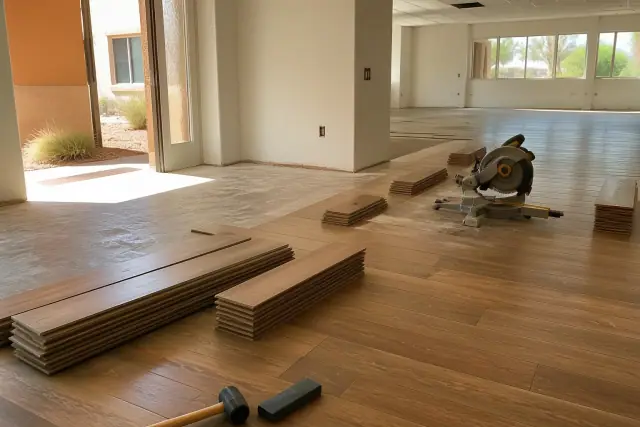
Commercial laminate flooring installation with planks, a saw, and a tapping block in a workspace in Phoenix, AZ.

Commercial buildouts need a product and installation method chosen for heavier traffic, room configuration, and the specified finish. We can recommend higher AC-rated collections and determine whether a floating click-lock floor or a glue-down method better fits the space.

Request Estimate

Click-Lock Floating Floors

Click-lock laminate flooring installed in a Phoenix, AZ home with baseboard trim being fitted against the wall.

Click-lock planks interlock into a floating floor instead of bonding to the subfloor. This common residential method allows natural expansion and contraction, and it can make future board replacement easier when the affected planks are accessible.

Request Estimate

Glue-Down Laminate Installation

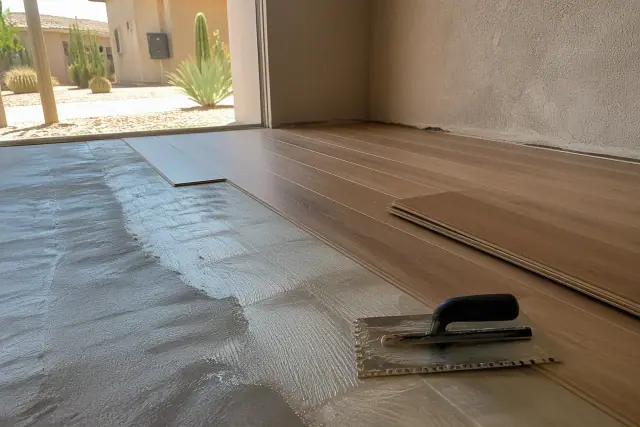
Glue-down laminate flooring installation on a dusty subfloor with adhesive and a notched trowel in Phoenix, AZ.

Glue-down installation bonds the flooring directly to a properly prepared subfloor. We use it for commercial settings or specific room configurations where a floating floor is not the better fit, rather than applying one method to every project.

Request Estimate

Laminate Floor Repair

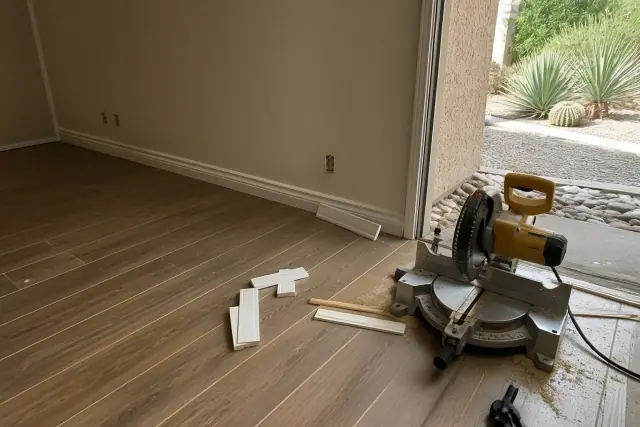
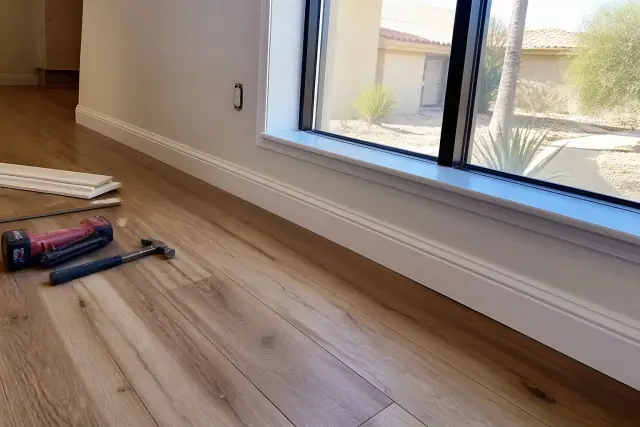
Contractor installing baseboards after laminate floor repair in a Phoenix, AZ home.

Peaking seams, water-related swelling, and impact chips are three common reasons for a repair assessment. Board-level replacement can work when damage is limited to a few planks and matching material remains available; widespread damage or a discontinued pattern may make full replacement more cost-effective.

Request Estimate

Subfloor Preparation and Moisture Protection

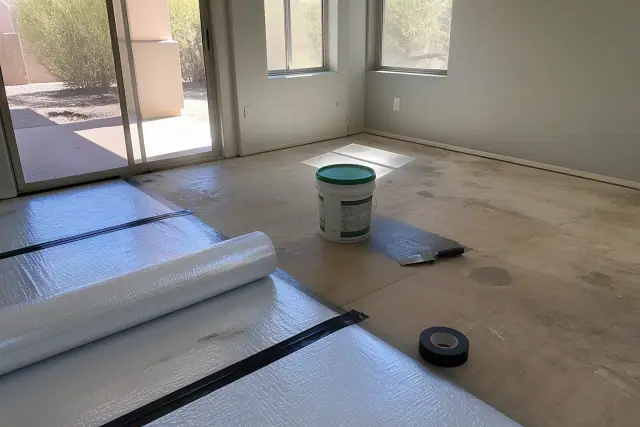
Contractor preparing a subfloor with moisture barrier and leveling compound in a Phoenix, AZ home.

Before flooring goes down, we use a calibrated meter to test moisture, check flatness within industry tolerance, and identify cracks or uneven areas that need leveling compound. Over concrete, a vapor barrier is standard practice for laminate and hardwood work, not an optional upgrade.

Request Estimate
Laminate Product Options

Types of Laminate Flooring Options

Core type, wear rating, thickness, surface texture, and moisture resistance all change how laminate performs. We compare those attributes with the room so the choice reflects real traffic and exposure rather than appearance alone.

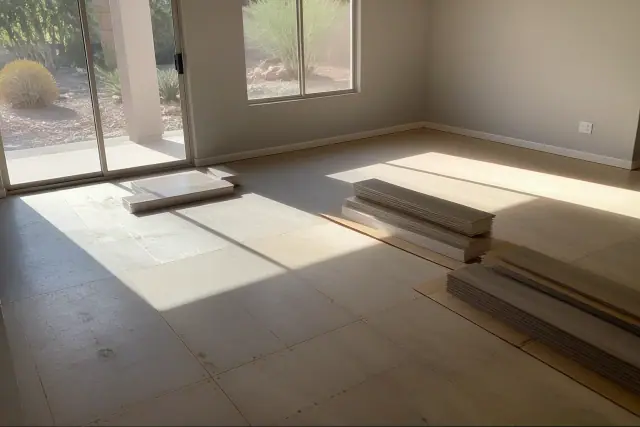
Traditional HDF laminate flooring staged for installation on a leveled subfloor in a Phoenix, AZ home.

Traditional HDF Laminate

Traditional laminate uses a high-density fiberboard core beneath the decor and wear layers. It is a strong fit for dry living rooms and bedrooms when the product is acclimated and protected from slab moisture.

  • Entry-level material typically runs about $0.70 to $1.20 per square foot
  • HDF core creates a firm, traditional underfoot feel
  • AC3 and AC4 grades cover common residential traffic needs
  • Available in wood-look and stone-look decor finishes
  • Best suited to rooms without routine spill or standing-water risk
Request Estimate
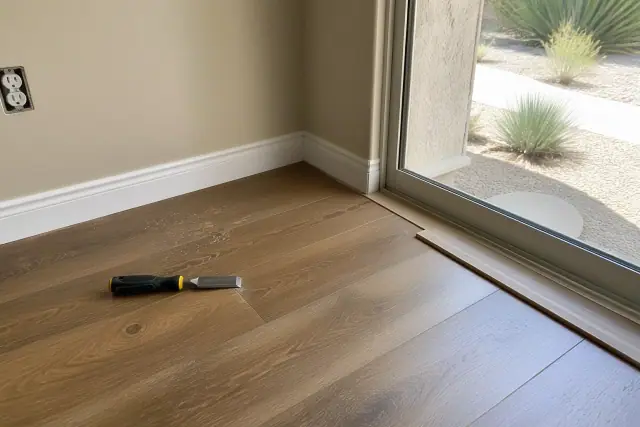
Waterproof rigid-core laminate flooring installation with baseboard trim in a Phoenix, AZ home.

Waterproof Rigid-Core Laminate

Rigid-core SPC laminate uses a stone-composite core that resists moisture significantly better than standard HDF. It can be a practical option where humidity and spills are greater concerns, although fully waterproof LVP remains the preferred choice for the wettest rooms.

  • Premium rigid-core material runs about $2.00 to $2.50 per square foot and up
  • Stone-composite core offers better moisture resistance than HDF
  • Enhanced textures and bevel detailing improve visual depth
  • Higher-end collections may carry 15- to 25-year residential wear warranties from the manufacturer
  • Room moisture exposure still guides the final product recommendation
Request Estimate
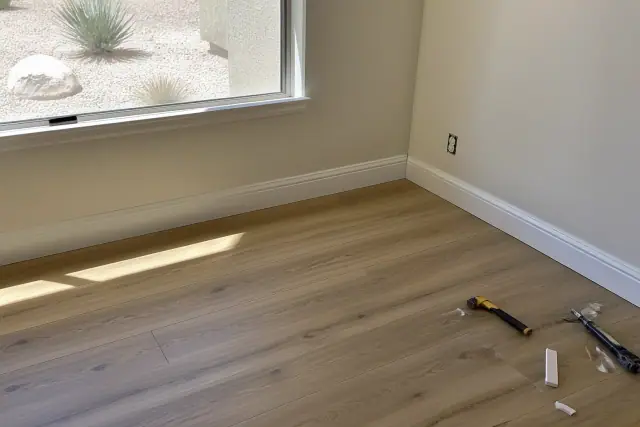
Wood-look laminate flooring installation with baseboard trim in a sunlit room in Phoenix, AZ.

Wood-Look Laminate

Wood-look laminate uses a printed decor layer and, in premium collections, embossed grain and bevel detailing to create a more realistic board. It gives dry rooms the appearance and firm feel many homeowners prefer without the refinishing needs of hardwood.

  • Mid-range collections typically run $1.20 to $2.00 per square foot for material
  • Printed grain delivers familiar hardwood character
  • Embossed texture can align surface feel with the visual pattern
  • Beveled edges add definition between individual planks
  • A practical match for bedrooms and living rooms
Request Estimate
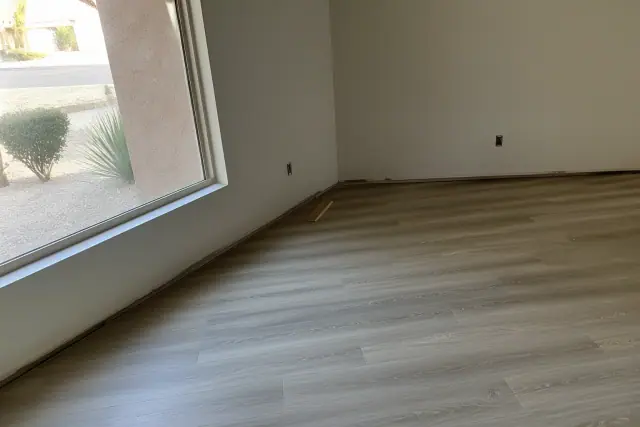
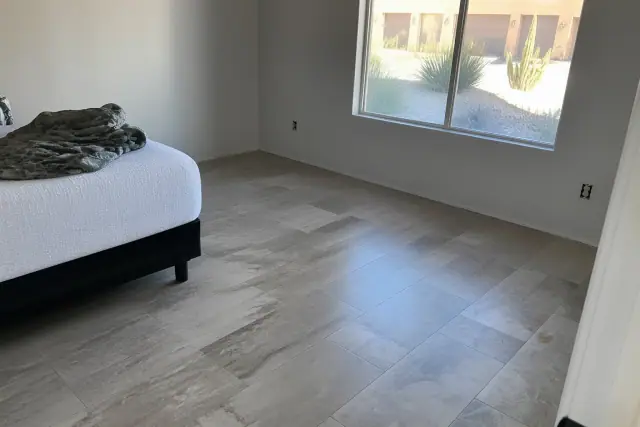
Stone-look laminate flooring installed in a residential bedroom in Phoenix, AZ, with a window view of desert landscaping.

Stone-Look Laminate

Stone-look collections use the laminate decor layer to reproduce tile or stone character in a plank-based floor. We compare the look with room moisture and traffic before deciding whether laminate, tile, LVP, or SPC is the more suitable material.

  • Printed decor layer provides stone or tile visuals
  • Hard laminate surface resists everyday scratches and dents
  • Core choice determines how the floor responds to moisture
  • Click-lock formats support floating-floor installation
  • Tile and waterproof LVP remain alternatives for wetter rooms
Request Estimate
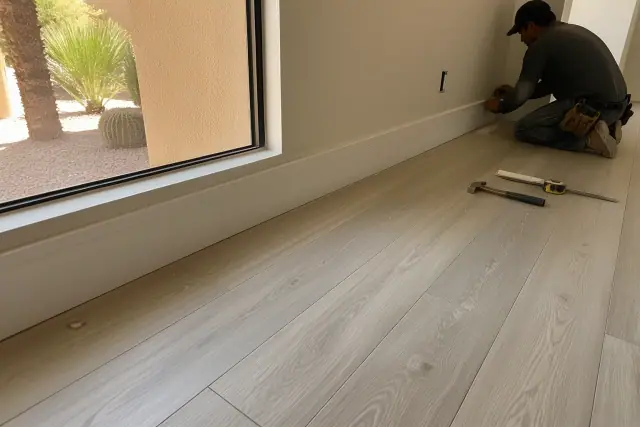
Contractor installing laminate flooring with baseboards in a Phoenix, AZ home.

AC-Rated Laminate

The AC rating describes how a laminate wear layer is suited to traffic, from light residential to heavy commercial use. Higher-rated products use a denser aluminum oxide-infused wear layer to better resist abrasion from desert grit, pets, and furniture.

  • AC1 is intended for light residential traffic
  • Builder-grade AC2 offers less wear resistance
  • AC3 fits many everyday residential spaces
  • AC4 is a durable choice for high-traffic homes
  • AC5 is designed for heavy commercial use
Request Estimate
Finding Your Right Fit

Choosing the Right Laminate Flooring Approach

A useful recommendation starts with the room, not the product box. We weigh spill risk, slab moisture, traffic, sound needs, visual preference, and budget before pairing a core, wear rating, thickness, underlayment, and installation method.

Room-by-Room Product Guidance

Living rooms and bedrooms may benefit from traditional laminate's look and firm feel, while bathrooms, laundry rooms, and entries often call for waterproof SPC or LVP. Because we install laminate, vinyl, tile, hardwood, and carpet, the recommendation can follow the room rather than a single stocked material.

Phoenix Slab and Moisture Preparation

Moisture testing, flatness checks, crack review, leveling, and a suitable vapor barrier address conditions that product selection alone cannot fix. We also match foam, cork, or combination underlayment to the subfloor and sound requirements.

Licensed, Insured Installation

Phoenix Expert Flooring is a licensed, insured flooring contractor for residential and commercial work. Crews follow National Wood Flooring Association guidance for acclimation and moisture testing, and one point of contact carries the project from measurement through the final walkthrough.

What Sets Us Apart

Why Choose Us for Laminate Flooring Installation?

A straightforward site visit replaces guesswork with measurements, moisture findings, product choices, and the preparation the floor requires. You receive a written estimate, a defined installation timeline, and a consistent contact through subfloor prep, plank installation, trim, and inspection.

Request Estimate

Moisture Moving Through Concrete

Concrete can transmit moisture upward long after it was poured, including in homes near canal-irrigated landscaping. A calibrated slab test and vapor barrier help protect laminate's wood-based core before moisture reaches it.

Swollen Seams Near Wet Areas

Traditional HDF laminate can swell when water sits near dishwashers, exterior doors, or other spill-prone areas. Waterproof-rated laminate, SPC, or LVP may be the safer room-specific choice where a standard core could fail within a year or two.

Peaking and Buckling

Missing expansion gaps, skipped moisture barriers, or poor locking engagement can make seams peak and boards buckle. We leave the manufacturer-specified gap at walls and transitions, then inspect the locking system after installation.

Scratches from Desert Grit

Sand and grit tracked in from Valley landscaping act as abrasives under shoes and furniture. A denser aluminum oxide-infused wear layer and an appropriate AC rating provide better resistance than a thin, low-grade surface.

Impact Chips and Isolated Damage

A dropped object can chip one board even when the rest of the floor remains sound. When damage is isolated and matching stock is available, board-level replacement can restore the affected area without replacing the full floor.

Discontinued Matching Planks

Repair becomes harder when the original color, texture, or locking profile has been discontinued. If a suitable match is unavailable or damage covers a large portion of the room, full replacement can be more cost-effective than visible patchwork.

How it works

Our Laminate Flooring Process

Installation quality can separate a laminate floor that struggles at 10 years from one that reaches 25. We use a consistent sequence from site measurement and slab testing through acclimation, layout, installation, trim, and final inspection.

01.

Site Visit & Measurement

We measure the room, review traffic and moisture exposure, discuss product tiers, and note whether existing tile or carpet needs removal. The visit supports a written estimate instead of a phone-only guess.

02.

Moisture and Flatness Testing

A calibrated meter checks slab moisture, while flatness and crack checks reveal where leveling compound or repair is needed. These findings determine vapor-barrier and preparation requirements before any plank is installed.

03.

Product Acclimation

Laminate boards acclimate inside the room for 48 to 72 hours before installation. That step matters in Phoenix because indoor humidity changes sharply between January and the summer monsoon season.

04.

Layout and Underlayment Planning

We map plank direction around the main light source, doorway sightlines, walls, and transitions before cutting. Foam, cork, or combination underlayment is matched to the subfloor and sound requirements.

05.

Plank Installation

Crews install the specified click-lock floating floor or glue-down system and maintain the manufacturer-required expansion gap at walls and transitions. Each row is checked for alignment, seam engagement, and fit as work progresses.

06.

Trim and Final Walkthrough

Transition strips, quarter round, or baseboards are installed as needed. We then walk the floor to inspect seams, gaps, locking engagement, and trim before calling the project complete.

Plan Your Flooring Project

Schedule a Laminate Flooring Consultation

Request an in-person measurement to compare laminate collections, installation methods, moisture protection, and preparation needs for your Phoenix property. We will turn the findings into a written estimate with a defined scope and timeline.

Flooring Help

Laminate Flooring FAQs

These answers cover Phoenix laminate costs, product choices, slab moisture, installation methods, repair, acclimation, and care. A site visit is still the best way to match those factors to a specific room and subfloor.

Call Our Flooring Team

A 1,000-square-foot Phoenix project typically totals about $4,000 to $11,000 depending on product tier, subfloor condition, and removal work. Material commonly runs $1 to $4 per square foot, while installation labor adds about $3 to $7 per square foot. Leveling, a moisture barrier, or removal of tile or carpet can move the project toward the higher end.

Laminate generally offers a more authentic wood-grain look and a firmer feel, which can suit living rooms and bedrooms. Luxury vinyl plank is fully waterproof and usually works better in bathrooms, laundry rooms, kitchens, and entries. The better choice depends on the room's moisture exposure and the look you prefer.

The best value balances price per square foot with the wear rating, core type, and installation quality. Phoenix Expert Flooring sources through distributors and wholesale relationships so homeowners can compare AC3 and AC4 products without automatically dropping to a thin, low-grade wear layer. A cheap floor that needs replacement in three years can cost more than a mid-range floor that lasts much longer.

Buying through a contractor who also installs the floor allows the product to be checked against the subfloor and moisture conditions before purchase. We source laminate, LVP, and SPC through established Phoenix-metro distributors, and we can also install material you have already purchased elsewhere.

Most properly installed and maintained laminate lasts 15 to 25 years, and some higher-end rigid-core products are rated for 20 years or more of residential wear. Phoenix humidity swings make acclimation and slab-moisture protection important to reaching the upper end. Dry mopping, prompt spill cleanup, and furniture pads also support a longer service life.

Yes, in almost every Phoenix slab installation. Concrete can transmit moisture upward even years after the pour, so we test the slab first and install a vapor barrier as standard practice for laminate or hardwood over concrete. The test also helps identify whether additional preparation is needed.

Click-lock planks interlock into a floating floor that can expand and contract without being attached to the subfloor. Glue-down installation bonds the material directly to a prepared surface and may suit commercial spaces or particular room configurations. We choose the method after reviewing the subfloor and room use.

AC3 fits many residential rooms, while AC4 offers added wear resistance for hallways, living rooms, homes with pets, and other high-traffic spaces. The rating should reflect real traffic and tracked-in desert grit rather than price alone. AC5 is generally intended for heavy commercial use.

Laminate commonly ranges from 6mm to 12mm thick. Thicker boards generally feel more solid underfoot and can improve sound dampening, but thickness does not replace the need for the right wear rating, core, and subfloor preparation.

Isolated chips, swollen boards, or seam damage may be repairable when only a few planks are affected and a matching product is available. If damage is widespread or the original pattern is discontinued, full replacement can be more cost-effective than patchwork. An inspection determines which condition applies.

Subfloor leveling, old-floor removal, moisture-barrier needs, room layout, and product grade all affect cost. A straightforward 260-square-foot bedroom may run under $1,000 installed, while a 3,600-square-foot whole-house project with plank-quality upgrades can range from $10,000 to $30,000. An in-person measurement is needed for a line-item estimate.

Laminate boards should acclimate in the room for 48 to 72 hours before installation. This allows the material to adjust to indoor temperature and humidity, which is especially important when Phoenix conditions shift between the dry season and summer monsoon humidity.

Use a dry or barely damp microfiber mop, clean spills promptly, and avoid steam cleaners. Entry mats reduce abrasive desert grit, while felt pads help prevent furniture scratches. These habits protect seams and the wear layer without leaving excess water on the floor.