Full Sand and Refinish
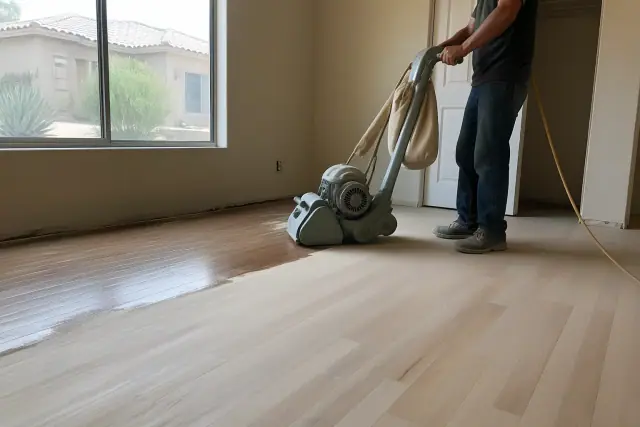
A full sand and refinish removes the old coating, smooths surface wear, and prepares bare wood for stain when desired. Multiple polyurethane coats then rebuild the protective surface.
Request Estimate
Phoenix Expert Flooring provides hardwood floor refinishing for homes and businesses in Phoenix and across the metro area. Our work includes full sand-and-refinish projects, dustless sanding, screen-and-recoat maintenance, targeted plank repair, staining, and oil-modified or water-based polyurethane finishes. We refinish solid oak, maple, hickory, cherry, and walnut as well as engineered hardwood in slab-on-grade homes. When a property needs more than refinishing, our broader services include flooring installation, repair and replacement, tile, luxury vinyl plank, laminate, carpet, epoxy, and commercial flooring.
Phoenix's dry heat can hold relative humidity below 20% for months, while west-facing windows may expose flooring to intense sun for six or more hours a day. Those conditions can bleach boards, open seams, create hairline checking, and leave polyurethane dull or chalky. Monsoon humidity spikes can then cause temporary cupping in wood that has stayed dry for months. We assess the wood, finish, moisture, and subfloor before recommending full refinishing, a screen and recoat, or targeted repair.
Our crews follow National Wood Flooring Association guidelines for moisture testing and acclimation, and our contracting work operates under Arizona Registrar of Contractors licensing requirements. The assessment and scope come before the quote so you know which approach fits the floor's actual condition.
Phoenix Expert Flooring provides hardwood floor refinishing throughout Phoenix and the metro area, including Scottsdale, Mesa, Gilbert, Chandler, and Tempe.
Hardwood floor refinishing removes worn finish and the top few millimeters of the wear layer so a structurally sound floor can be renewed without replacement. It addresses surface scratches, fading, dullness, and exposed grain while preserving the existing boards.
A full refinish uses progressive sanding to remove the old coating and level surface wear. Stain is optional when you want a different wood tone, and multiple coats of oil-modified or water-based polyurethane build the protective finish.
When the wood is undamaged and only the topcoat is tired, a screen and recoat may be enough. Floors with deep gouges, severe cupping, rot, or cracked boards need restoration or plank repair before the room is refinished.
Refinishing is a practical choice when the boards remain structurally sound but the surface looks faded, scratched, or worn. A condition-based scope can restore the appearance, protect the wear layer, and avoid replacing usable hardwood.
The right service depends on whether the wear is limited to the coating, reaches into the wood, or involves moisture and structural damage. We match the scope to the floor's species, finish, moisture content, subfloor, and repair needs.
A full sand and refinish removes the old coating, smooths surface wear, and prepares bare wood for stain when desired. Multiple polyurethane coats then rebuild the protective surface.
Request Estimate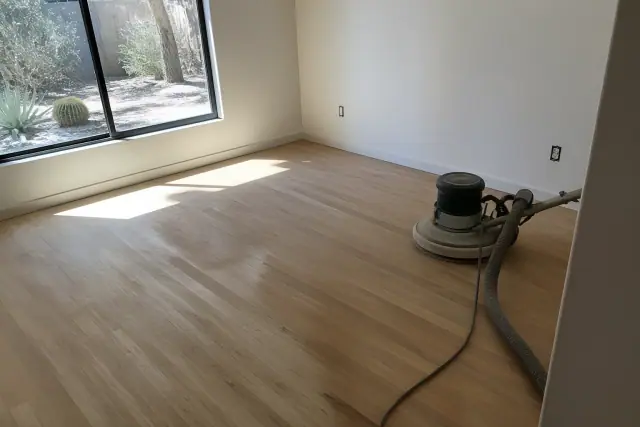
A screen and recoat lightly abrades a worn topcoat and adds fresh polyurethane without sanding down to bare wood. It costs less than full refinishing and extends floors whose wood remains undamaged.
Request Estimate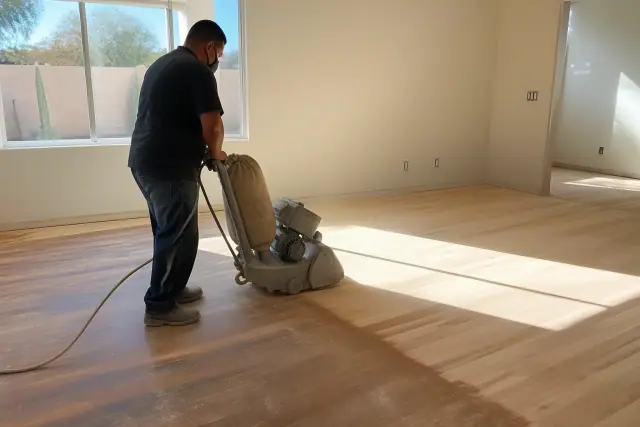
Dust-containment sanding captures the majority of airborne particulate at the drum, helping keep debris out of the HVAC system and reducing cleanup. Edge sanders and detail tools bring closets, baseboards, and stair edges in line with the field sanding.
Request Estimate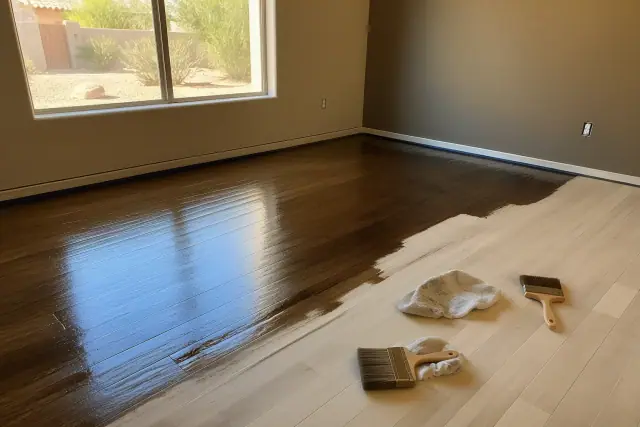
After sanding, stain can change the floor's tone before the finish is built in multiple thin coats. Oil-modified and water-based polyurethane are selected around traffic, desired sheen, odor, and curing needs.
Request Estimate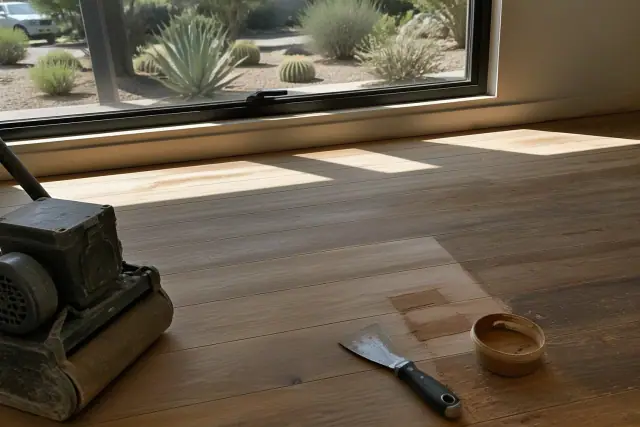
Light scratches usually sand out, while deeper gouges may call for wood filler, spot sanding, or plank replacement. Cracked or rotted boards can be removed and matched by species and plank width before the room is blended.
Request Estimate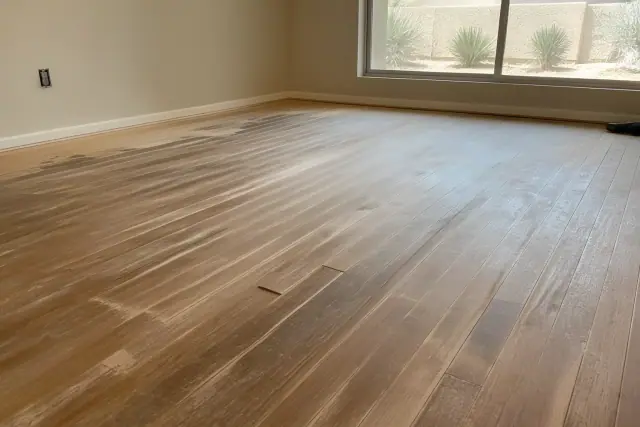
Moisture restoration starts by finding and stopping the water source. Boards must dry and re-acclimate before sanding, and pieces beyond sanding tolerance are replaced before stain is blended across the repaired room.
Request EstimateSpecies, construction, damage depth, and finish goals all affect a refinishing plan. The options below show how we separate solid and engineered wood, surface wear and structural damage, and coating choices.
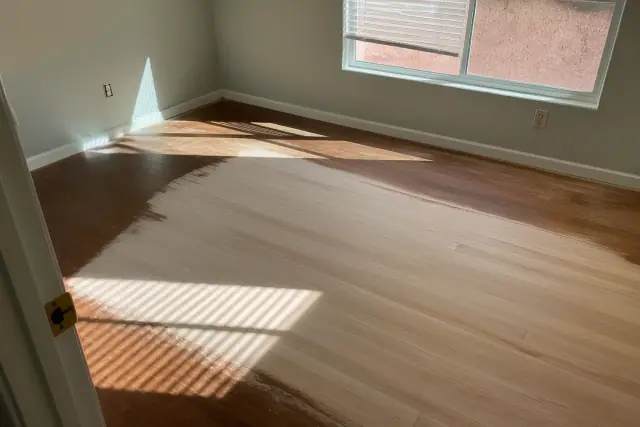
Solid hardwood can often be refinished repeatedly when enough wear layer remains. We assess species, condition, moisture, and prior sanding before choosing the abrasive sequence and finish.
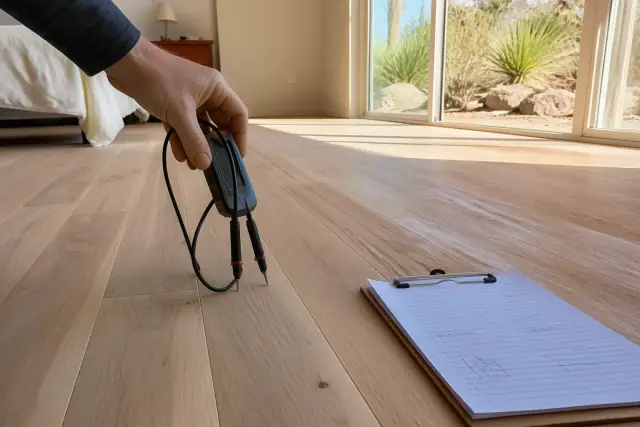
Engineered hardwood is common in Phoenix homes where slab-on-grade construction limits solid-wood options. We confirm that its wear layer can be treated safely before recommending full sanding or a lighter recoat.
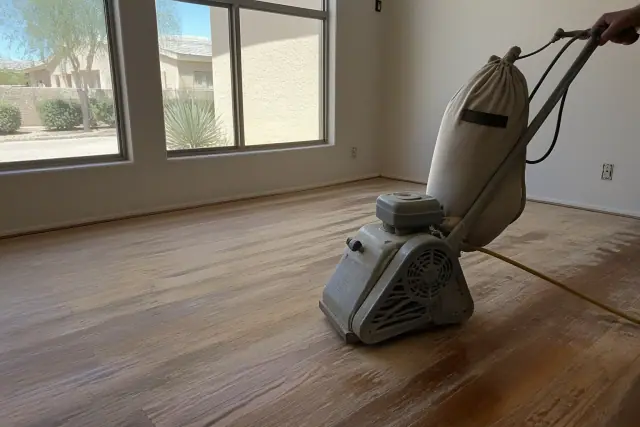
A standard refinish fits structurally sound floors with damage concentrated in the finish and upper wear layer. Many Phoenix floors reach this point 8-15 years after their last refinish, depending on exposure and use.
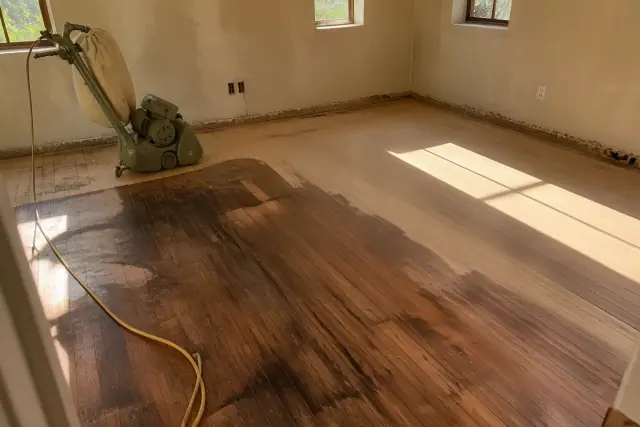
Restoration is needed when damage extends beyond the finish into the boards or subfloor. The water source and unstable material must be addressed before refinishing can create a lasting surface.
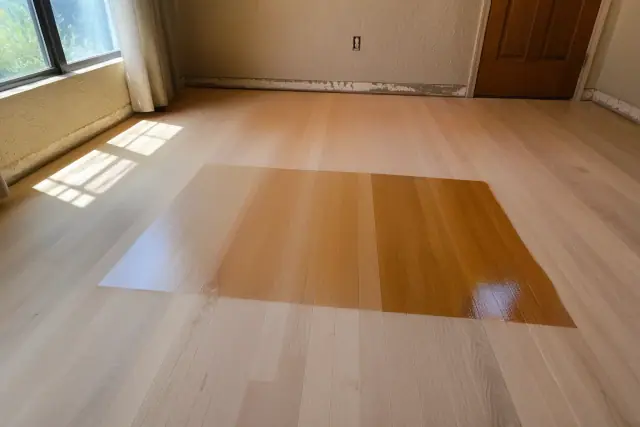
Coating choice affects odor, dry time, sheen, and how the floor looks under Phoenix's bright interior light. We discuss household traffic and maintenance before choosing the finish system.
A useful recommendation starts with evidence from the floor rather than a preset package. We compare the wear layer, moisture readings, subfloor stability, repair needs, traffic, and desired sheen before defining the scope.
The walkthrough covers wood species, existing finish, moisture content, and subfloor condition. In homes built before 1980, we also flag asbestos-era adhesive concerns that may require special handling under Arizona Department of Environmental Quality guidance.
Progressive sanding removes the old finish without skipping the grit stages that help prevent swirl marks and uneven stain absorption. Dust containment at the equipment and careful edge work improve control through the room.
Phoenix heat, low humidity, bright light, and monsoon swings all influence coating and scheduling decisions. We apply multiple thin coats and match oil-modified or water-based polyurethane to traffic, sheen, odor, and curing needs.
Phoenix Expert Flooring follows National Wood Flooring Association sanding and finishing guidance and works under Arizona Registrar of Contractors licensing requirements. Our experience spans historic Willo District and Encanto-Palmcroft homes, new construction in Gilbert and Ahwatukee, and commercial offices, retail spaces, and restaurants. We explain whether the floor needs a full refinish, a lighter recoat, or repair before pricing the work.
Request Floor AssessmentLong daily exposure through west-facing windows can break down finish and bleach boards before the wood itself is worn out. This pattern is common in Arcadia, the Biltmore corridor, and older bungalow neighborhoods near downtown.
Pet claws, furniture, and heavy traffic can cut through the coating and into the wear layer. Surface scratches may sand out, while deep gouges need filler, spot work, or plank replacement.
Gray or black staining near exterior doors, persistent water spots, and cupped boards point to moisture rather than ordinary wear. Leaks and monsoon intrusion must be corrected, then the wood must dry before sanding.
Extended dry conditions can open seams and contribute to hairline checking. Boards that feel rough or splintery, or gaps wide enough to catch a coin, need a closer assessment than surface cleaning.
A matte, cloudy path through busy rooms usually signals a worn topcoat. If the wood below is intact, a screen and recoat may restore protection without a full bare-wood sanding.
Loose fasteners, squeaks, cracks, rot, and unstable boards should be corrected before sanding. Otherwise movement in the subfloor can carry through the new finish and shorten the result.
Each project moves from assessment and preparation through controlled sanding, finish application, and inspection. Repairs and coating choices are resolved before they can disrupt the middle of the job.
We identify the wood species and existing finish, take readings with a pin or pinless moisture meter, and inspect the subfloor. The findings determine full refinishing, a screen and recoat, or repair.
Furniture and baseboards are protected, HVAC vents are sealed, and shoe molding is removed where needed. Squeaking boards and loose fasteners are addressed before sanding starts.
Old finish is typically removed around 36-40 grit before the floor progresses through 60, 80, and a final 100-120 grit pass. The staged sequence limits coarse scratches, while dust containment captures most particulate at the drum.
Edge sanders and hand or oscillating tools reach baseboards, closets, and stair edges that a drum sander cannot. Detail work is blended with the field so the room accepts stain and finish evenly.
Stain is applied when a color change is part of the plan. Multiple thin coats of the selected oil-modified or water-based polyurethane are then applied with dry time between coats.
Every board is checked under raking light for sanding marks, bubbles, and lap lines. We complete corrections, remove dust and debris, and provide the care schedule for the curing finish.
Request an on-site assessment for a condition-based scope and straightforward pricing. We will examine the finish, wear layer, moisture, subfloor, repair needs, and desired sheen before recommending the right path.
These answers cover Phoenix hardwood refinishing cost, timing, finish choices, maintenance, and the conditions that change the scope. A floor assessment is the best way to separate surface wear from damage that needs repair.
Call NowStandard oak refinishing typically runs $3 to $5 per square foot in the Phoenix market, while full sanding and refinishing commonly ranges from $4 to $7 per square foot depending on finish type and coat count. A 1,000-square-foot area generally falls between $3,000 and $7,000. Smaller projects and screen-and-recoat work can range from $600 to $5,000 depending on scope. Species, condition, stain changes, repairs, furniture moving, and edge work all affect the final quote.
Refinishing is usually less expensive when the existing boards are structurally sound because it avoids new hardwood, subfloor preparation, installation labor, and disposal. Replacement becomes more practical when a large share of the floor has serious water damage or the wear layer is too thin to sand. Most solid hardwood floors can be refinished five to seven times before sanding is no longer safe.
The mild fall and winter period, roughly October through March, is the most convenient window because ventilation is easier and finish coats can level without extreme outdoor heat. Summer work is still possible, but high temperatures can accelerate drying unevenly. Monsoon humidity spikes also need to be considered when scheduling curing time.
A standard 1,000-square-foot project typically takes three to five days, including sanding, optional staining, polyurethane coats, and dry time. Oil-modified polyurethane can add a day or two compared with faster-drying water-based finish. Furniture, detailed edge work, and plank repairs can extend the timeline.
You can typically walk on the floor in socks after 24 hours. Wait at least 48 to 72 hours before returning furniture and rugs, and follow the written care schedule for the selected finish. Polyurethane generally takes two to four weeks to cure fully, so avoid rubber-backed mats, concentrated heavy traffic, and scratching from pet claws during that period.
Rental equipment often lacks professional dust containment, and skipped grit stages can leave swirl marks, gouges, or uneven stain absorption. DIY work may also miss moisture or subfloor problems that later cause cupping or cracking. The equipment and material cost should be weighed against the risk of sanding through the wear layer or having to redo the finish.
Yes. Water-based polyurethane has lower VOC content and less odor than traditional oil-modified finish. For homes with dogs or cats, we can discuss a higher-durability topcoat and a sheen that helps hide dust and pet hair, while the floor still needs protection from claws during curing.
A full refinish sands away the old coating and surface wear before optional stain and new polyurethane are applied. A screen and recoat only abrades the existing topcoat and adds a fresh coat, so it fits floors whose wood remains undamaged. The walkthrough determines whether the wear is only in the finish or extends into the boards.
Most refinished floors hold up 7-10 years before they need attention again, although traffic, pets, sunlight, moisture, and care all affect that interval. Across multiple refinishing cycles, the overall solid hardwood system can last 20-30 years. Felt furniture pads, reasonable indoor humidity, and avoiding direct steam mopping help protect the finish.
Engineered hardwood may be a refinishing candidate when its wear layer is thick enough and the boards are stable. Because it is often used over slab-on-grade construction in Phoenix, we check the board construction, moisture, and subfloor before recommending sanding. A screen and recoat may be the safer choice when only the topcoat is worn.
Active leaks, wet boards, severe cupping, rot, cracks, loose fasteners, and unstable planks need attention before sanding. Moisture-damaged wood must dry and re-acclimate, and boards beyond sanding tolerance may need replacement. Repairs are matched by species and plank width before stain is blended through the room.
Long sun exposure and extended low humidity can bleach finish, open seams, and contribute to checking, while monsoon moisture can temporarily cup dry boards. These swings make moisture testing, acclimation, coating selection, and curing conditions important. Indoor humidity control and window protection can help the renewed finish and wood remain more stable.
We identify the species and existing finish, inspect the wear layer and subfloor, and take moisture readings with a pin or pinless meter. We also look for loose boards, water damage, edge-work needs, and the household's traffic and sheen goals. In homes built before 1980, older mastic may raise asbestos-era adhesive concerns that require special handling guidance before work begins.