Proudly serving Phoenix, Scottsdale, Glendale, Tempe, Mesa, Chandler & surrounding areasCall or Text 24/7: 480-264-9683
Aerial drone view of a suburban residential neighborhood with desert landscaping and saguaro cacti in Phoenix, AZ.

Flooring Installation & Home Remodeling Services in Surprise, AZ

Phoenix Expert Flooring installs and restores flooring for homeowners and businesses throughout Surprise, Arizona. Our local services include flooring installation, luxury vinyl plank, and tile, plus hardwood, laminate, carpet, epoxy, refinishing, repair, replacement, and commercial flooring. We match materials and installation methods to the room, subfloor, traffic, and desert conditions. From residential remodels to new-construction handoffs and commercial buildouts, we plan the work around the property's real needs.

Surprise floors face fine desert dust, expansive caliche soil, monsoon moisture, and summer slab temperatures that can climb well past 140 degrees under direct sun. Those conditions can expose uneven concrete, aggravate missing expansion gaps, and challenge materials that move with heat or low humidity. We begin with measurement, subfloor inspection, and moisture testing before recommending an installation method. Licensed, bonded, and insured work, proper preparation, and manufacturer-specified installation help protect the finished floor.

We serve Surprise neighborhoods including Marley Park, Sierra Verde, Rancho Gabriela, Sun Village, Asante, Original Town Surprise, and the Prasada corridor. Request a free flooring estimate to compare material options, installed costs, and a realistic project schedule.

★ ★ ★ ★ ★4.9/5 Average Rating - 20+ Years of Experience - Surprise Flooring Company Specialists - Residential & Commercial
Flooring Services

Flooring Services in Surprise, AZ

Surprise expanded from 30,848 residents in 2000 to 117,517 by 2010 and 143,148 at the 2020 census, creating a mix of aging original floors, new-build installations, and growing commercial space. We install and repair major flooring categories for homes, retail buildouts, offices, warehouses, and light industrial properties. Property owners with projects elsewhere in the Valley can also review our flooring services in Scottsdale, AZ .

Flooring Installation

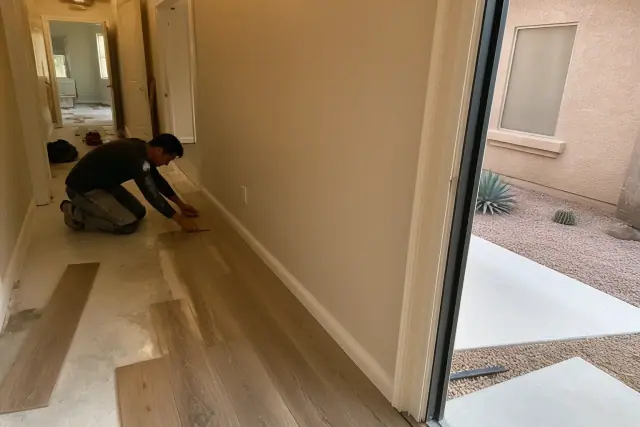
A worker installing luxury vinyl planks in a narrow hallway of a home in Surprise, AZ.

We plan flooring installation around the subfloor, room use, material requirements, and transitions to existing surfaces. Projects can include new construction, remodels, old-floor removal, damaged-subfloor work, and first-time installation for residential or commercial spaces.

Explore Service

Luxury Vinyl Plank Flooring

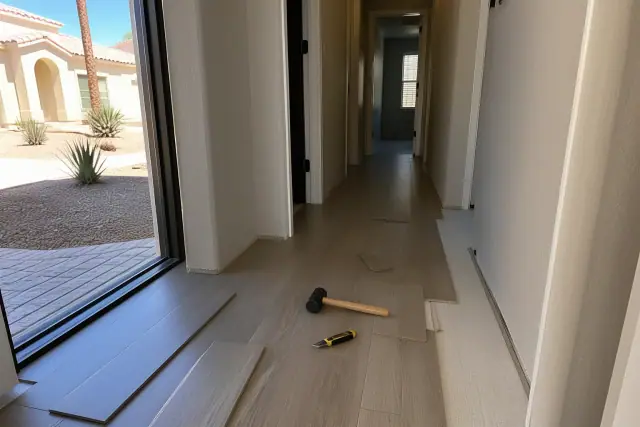
Luxury vinyl plank flooring installation in a hallway in Surprise, AZ, with a view of a stucco home through the doorway.

Rigid-core and SPC luxury vinyl plank can use attached underlayment with click-lock or glue-down installation, depending on the subfloor. Before laying planks over a slab, we moisture-test the concrete, verify flatness within 3/16 inch over a 10-foot span, and allow a minimum 48-hour acclimation period.

Explore Service

Tile Flooring

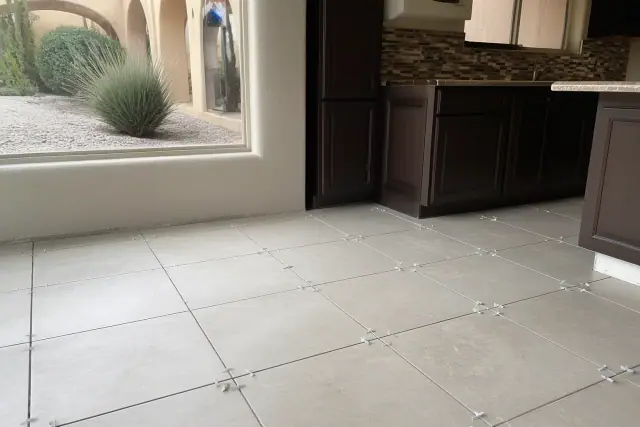
Ceramic tile flooring installation with spacers on a kitchen floor in a Surprise, AZ home.

We install porcelain, ceramic, and natural-stone tile with mud-set or thin-set methods suited to the subfloor and ANSI A108 installation standards. Expansion joints every 20 to 25 feet help accommodate thermal movement, while large-format porcelain and wood-look tile suit great rooms, kitchens, bathrooms, and entries.

Explore Service

Hardwood Flooring

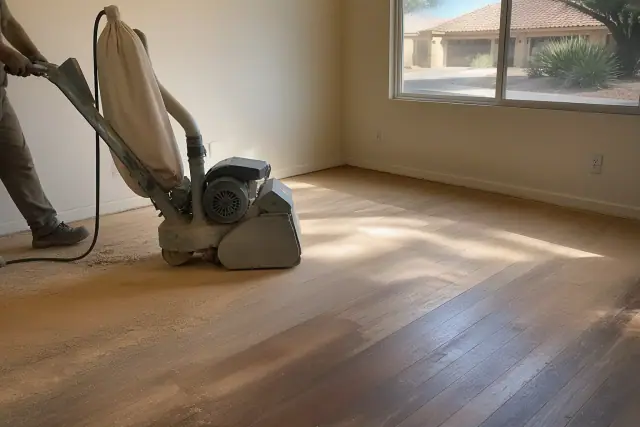
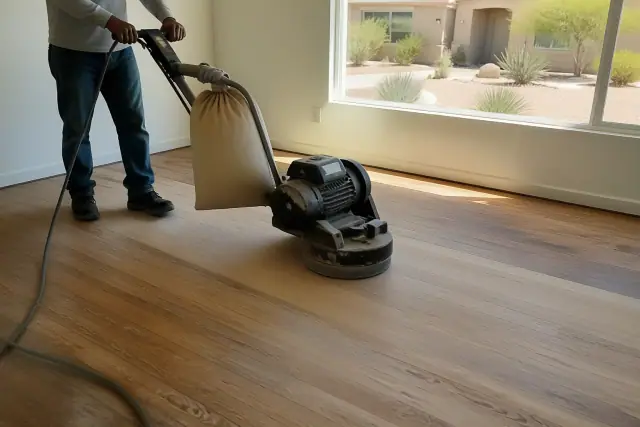
Industrial sander smoothing hardwood bedroom floors during a restoration project in Surprise, AZ.

Engineered hardwood's plywood or HDF core is generally better suited to Surprise's arid conditions than wide-plank solid wood, which can shrink and gap. When solid hardwood fits the property and design, proper moisture barriers and acclimation help protect the installation.

Laminate Flooring

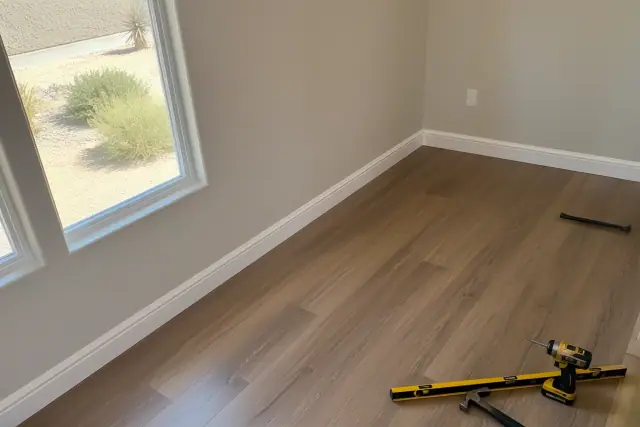
Newly installed laminate flooring and baseboards in a Surprise, AZ home.

Laminate is installed as a floating floor over foam or cork underlayment for sound control and light cushioning. Correct leveling, perimeter clearance, and staggered end joints prevent the peaking, hollow spots, and separation often found in rushed installations.

Carpet Installation

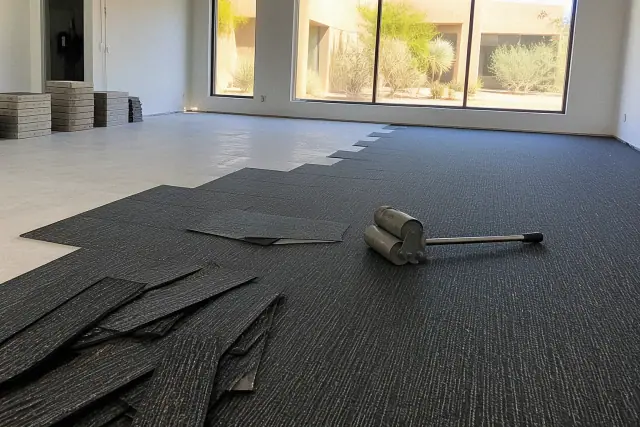
A contractor installing carpet tiles in an open workspace in Surprise, AZ, with a floor roller and tile scraps nearby.

We install carpet over tackless strip with padding density matched to the room's traffic and repair stretching, separated seams, and pet damage. Stain-resistant nylon and triexta fibers are practical for bedrooms and family spaces where comfort matters and desert grit gets tracked indoors.

Floor Repair & Replacement

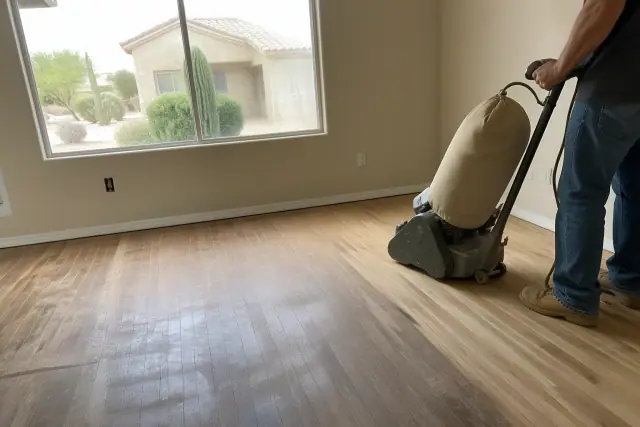
Industrial sander smoothing hardwood floor planks during a bedroom renovation in a home in Surprise, AZ.

Floor repair and replacement can address water damage near patio sliders, damaged boards, failed seams, cracked tile, worn carpet, and compromised subfloor material. Prompt evaluation after a water-heater leak or monsoon intrusion helps limit moisture exposure before new flooring goes down.

Hardwood Floor Refinishing

Industrial sander smoothing hardwood bedroom floors during a restoration project in Surprise, AZ.

Refinishing removes surface scratches, worn finish, and UV fading before a new polyurethane finish is applied for foot traffic and sun exposure. When the boards remain sound, restoration can cost a fraction of full replacement and extend a quality hardwood floor's life by 10 or more years.

Epoxy Flooring

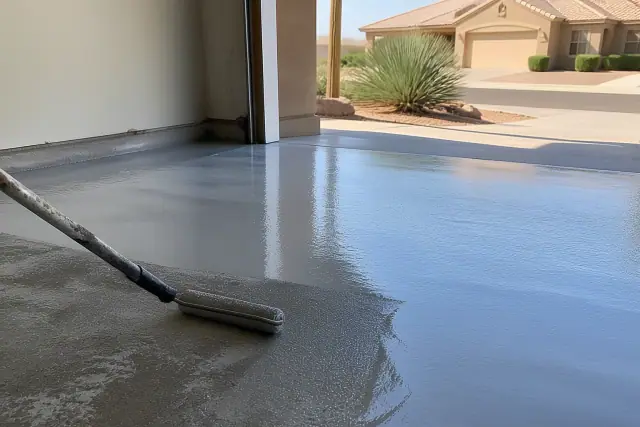
Wet epoxy resin being rolled onto a garage floor at a home in Surprise, AZ.

Multi-coat epoxy creates a chemical-resistant surface for garages, workshops, retail floors, and light industrial spaces after the concrete is profiled and moisture-tested. Industry data shows epoxy-coated concrete can experience up to 30 percent fewer maintenance events than bare concrete.

Commercial Flooring

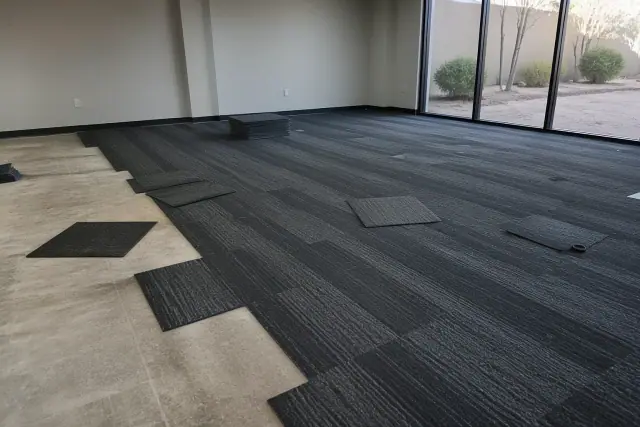
Carpet tile installation in a workspace during a flooring renovation in Surprise, AZ.

Commercial tile, polished concrete, LVP, and epoxy can be planned for offices, retail areas, medical spaces, warehouses, and light industrial floors. After-hours or phased scheduling helps reduce disruption while preparation and installation stay matched to the property's operating needs.

Flooring Selection

Choosing Flooring for Surprise Properties

The right floor balances desert climate, room moisture, subfloor condition, wear expectations, appearance, comfort, and budget. We compare material samples in the property's actual lighting, explain installation requirements, and recommend room-specific options instead of treating every space the same.

Desert-Ready Materials

Northwest Valley summer highs regularly exceed 110 degrees, and low ambient humidity can make solid wood contract. Engineered hardwood, LVP, and tile offer different ways to manage heat, thermal transfer, and dry-air movement when selected for the room.

Room-Specific Moisture Resistance

Monsoon season, typically July through September, can bring sharp humidity changes and moisture near doors, patios, kitchens, and laundry areas. Moisture-resistant cores, sealed grout, and suitable barriers or underlayment help the chosen surface perform in those conditions.

Subfloor Testing and Preparation

Concrete moisture, slab flatness, plywood condition, and transitions to existing tile all affect the installation method. Moisture meters, laser levels, leveling compounds, and proper concrete profiling identify or correct issues before they are hidden beneath the finish floor.

Project Budget and Scope

Typical installed flooring costs in Surprise range from $3 to $15 per square foot overall, while a full-room replacement often runs $1,500 to $10,000 or more depending on area and preparation. Listed material ranges are $6.91 to $11.81 per square foot for laminate, $4 to $9 for LVP, $3 to $7 for carpet, $7 to $15 for tile, $8 to $14 for engineered hardwood, and $3 to $9 for epoxy. An itemized free estimate clarifies materials, labor, removal, and potential subfloor work before installation.

Expected Wear Life

Quality flooring is commonly expected to last 15 to 25+ years when material, wear rating, preparation, and installation all fit the space. Traffic level, pet activity, sunlight, moisture, and maintenance should guide the choice instead of price alone.

Style, Comfort, and Maintenance

Wood-look tile, engineered hardwood, LVP, laminate, carpet, and polished surfaces each change how a room looks, feels, and is maintained. Side-by-side samples in the room's actual light make it easier to compare color, sheen, texture, cushioning, and cleaning needs.

Surprise Flooring Issues

Common Flooring Problems in Surprise Properties

Heat, shifting slab conditions, sudden moisture, dust, direct sunlight, and installation shortcuts can all shorten floor life. The visible symptom may be a raised seam, cracked tile, worn finish, stain, or hollow spot, but the repair should begin by identifying the underlying cause.

Request Floor Inspection

Uneven or Moving Slabs

Expansive caliche soil and normal settlement can leave slab-on-grade foundations with minor irregularities. Flooring laid before the surface is checked and leveled may flex, click, separate, or telegraph high and low areas.

Moisture Beneath the Floor

Untested slab moisture, flash-flood intrusion, plumbing leaks, and water near patio doors can move beneath laminate, LVP, wood, or epoxy. Trapped moisture can cause cupping, warping, delamination, mold risk, or subfloor rot, so the source must be addressed before replacement.

Peaking and Separated Planks

Laminate and floating floors need a recommended 1/4-inch expansion gap at walls and properly staggered end joints. When those details or subfloor leveling are skipped, peaking and separation can appear within a year or two.

Cracked or Loose Tile

Tile can crack or loosen when slab movement, poor mortar coverage, an unsuitable bed, or missing movement joints transfers stress into the surface. A repair evaluation should check the substrate and installation assembly instead of replacing only the visible tile.

Scratches, Wear, and UV Fading

Pet claws, tracked sand, high-traffic hallways, and strong light from west-facing windows can mark finishes and fade hardwood. Board condition and damage depth determine whether spot repair, refinishing, or replacement is the better path.

Dust, Grit, and Staining

Fine desert dust works into grout lines, carpet fibers, seams, and textured surfaces, especially near desert landscaping and the White Tank Mountains. Material texture, fiber choice, grout sealing, and routine care all influence how easily that buildup can be managed.

Why Choose Us

Why Choose Phoenix Expert Flooring in Surprise, AZ?

Local flooring work requires more than an attractive material sample. Phoenix Expert Flooring combines Arizona contractor accountability, desert-specific recommendations, subfloor testing, professional tools, and a documented installation process for homes and businesses.

Licensed, Bonded, and Insured

Phoenix Expert Flooring operates under Arizona Registrar of Contractors requirements and carries liability and workers' compensation coverage. When a project requires permits, including certain commercial work or plumbing-related tile shower work, we coordinate through the City of Surprise Building Safety Division.

Northwest Valley Experience

Working across the Phoenix metro builds practical knowledge of caliche soil, slab construction, older plywood subfloors, desert-facing rooms, and HOA considerations. That local context shapes recommendations for Marley Park, Sun City Grand, Prasada-area businesses, and other Surprise properties.

Preparation and Installation Accountability

We use moisture meters, laser levels, wet saws with diamond blades, and manufacturer-specified methods rather than hiding subfloor issues. Written estimates, clear material and labor details, proper fastening or bonding, and a final walkthrough make the project easier to evaluate from start to finish.

Simple Process

Our Flooring Installation Process in Surprise, AZ

Each project moves from measurement and testing through material selection, preparation, installation, and a final review. The sequence is adjusted for the flooring type and property while keeping costs, timing, transitions, and care requirements visible.

01.

On-Site Measurement and Estimate

We measure the rooms, discuss how each space is used, review material options, and prepare a free estimate with cost-per-square-foot information and realistic timing.

02.

Subfloor Inspection and Moisture Testing

Concrete or plywood is checked for moisture, flatness, damage, and transitions before materials are ordered or installed. The findings determine whether leveling, a barrier, profiling, or subfloor repair is needed.

03.

Material Selection and Ordering

Samples are compared in the property's lighting, then the selected material, underlayment, trim, and transitions are ordered. Any required acclimation is completed inside the installation environment.

04.

Furniture Moving and Floor Removal

Furniture is moved as planned, and existing carpet, tile, planks, adhesive, or damaged subfloor material is removed and disposed of. The exposed base is prepared for the specified installation.

05.

Manufacturer-Specified Installation

The floor is installed with the method suited to the material, such as thin-set for tile, click-lock or glue-down for LVP, a floating assembly for laminate, or tackless strip for carpet.

06.

Final Walkthrough and Care Guidance

We review trim, transitions, finish details, and room-specific care before closing the project. The walkthrough confirms the completed surface and explains cleaning and maintenance for the selected material.

Project Planning Examples

Flooring Plans for Surprise Homes & Businesses

Case Study 1: Whole-home planning: LVP or engineered hardwood can create visual continuity through living areas, while room-by-room moisture and traffic still guide underlayment and surface choices.

Case Study 2: Heat- and moisture-aware rooms: Tile or LVP can serve kitchens, laundry rooms, entries, and patio-adjacent spaces when slab testing, leveling, movement, and sealing details are handled first.

Case Study 3: Commercial scheduling: Tile, polished concrete, LVP, or epoxy can be installed after hours or in phases to help offices, retail spaces, medical properties, and light industrial facilities keep operating.

Start Your Project

Schedule a Flooring
Installation
Consultation

Request an on-site measurement and free flooring estimate for your Surprise home or business. We will compare materials, explain preparation needs, outline installed costs, and set a practical schedule for the selected floor.

Flooring Help

Flooring Installation FAQs for Surprise, AZ

These answers cover material selection, contractor questions, installation details, pricing, timing, repairs, and desert-climate concerns. Call if you need guidance for a specific room, subfloor, or commercial property.

Call Our Flooring Experts

The rule of 3, also called the 1/3 rule, means offsetting plank end joints in adjacent rows by at least one-third of the plank length. The stagger avoids a repeating H-pattern and improves the appearance and stability of laminate, LVP, and engineered hardwood.

Common regrets include solid hardwood in moisture-prone rooms, carpet in bathrooms or entries, glossy tile where water can make it slippery, and low-grade laminate in busy hallways. Material wear ratings and room conditions should be reviewed before anything is ordered.

Ask for the contractor's Arizona Registrar of Contractors license number, bonding and insurance details, subfloor inspection process, and planned moisture barrier or underlayment. Also request a written estimate separating materials and labor and explaining how hidden subfloor damage will be handled.

Avoid installing over an uneven or damp subfloor, skipping perimeter clearance, failing to stagger end joints, or laying planks before acclimation. Ignored concrete moisture can lead to warping within the first year, while poor leveling often creates hollow spots and clicking.

Luxury vinyl plank and engineered hardwood handle low-humidity and temperature changes better than many solid-wood options, while tile remains a strong fit for slab-on-grade homes. Kitchens and entries often suit tile or LVP; bedrooms and formal living rooms may favor engineered hardwood or carpet.

A 1,000-square-foot installation typically runs from $3,000 to $15,000 fully installed, depending on material, removal, layout, and subfloor condition. Laminate for that area is roughly $6,900 to $11,800, while carpet may cost less and tile or hardwood may cost more.

DIY can reduce upfront labor costs in a straightforward room, but leveling errors, moisture problems, missing movement space, and incorrect tool use can make repairs more expensive. Professional work is especially valuable for tile, subfloor repairs, complex layouts, and larger areas.

Timing depends on material, square footage, removal, preparation, and room complexity. Most residential rooms take one to three days, and same-day installation may be possible for a bathroom or single bedroom when the material is in stock and the subfloor is ready.

Material grade, room size, subfloor condition, old-floor removal, layout complexity, trim, transitions, and installation method all affect the total. A written on-site estimate can separate material and labor costs and identify preparation that may change the scope.

Concrete should be tested for moisture and checked for flatness before LVP is installed. Depending on the product and slab, the plan may include leveling compound, attached underlayment, a moisture barrier, and either click-lock or glue-down installation.

Porcelain, ceramic, and natural stone may use a mud-set or thin-set bed based on the substrate. Proper mortar coverage, movement joints, flatness, and methods consistent with ANSI A108 help the tile assembly accommodate Arizona slab conditions.

Moisture vapor moving through uncoated concrete is a leading cause of epoxy delamination. Profiling and testing the slab before a multi-coat system is applied helps the coating bond and perform in garages, workshops, and commercial spaces.

Refinishing can be the better choice when scratches, worn finish, or UV fading are at the surface and the boards remain structurally sound. Board-level damage is addressed before sanding and a new polyurethane finish, while severe moisture or subfloor damage may require replacement.

Low humidity, extreme summer heat, monsoon moisture, caliche-related slab movement, and fine desert dust affect different floors in different ways. Material cores, moisture protection, movement space, grout sealing, and underlayment should be matched to the room and exposure.

Service extends across Surprise, including Sun Village, Marley Park, Sierra Verde, Rancho Gabriela, Original Town Surprise, Asante, and the Prasada corridor. The source also lists Sun City, Sun City West, El Mirage, Youngtown, Waddell, Peoria, the Lake Pleasant corridor, northern Glendale neighborhoods, and unincorporated areas along Bell Road.