Proudly serving Phoenix, Scottsdale, Glendale, Tempe, Mesa, Chandler & surrounding areasCall or Text 24/7: 480-264-9683
Aerial drone view of a suburban residential neighborhood with desert landscaping and saguaro cacti in Phoenix, AZ.

Floor Repair, Replacement & Subfloor Restoration in Phoenix, AZ

Phoenix Expert Flooring provides floor repair and replacement for homes and businesses in Phoenix and across the metro area. Our crews repair and install hardwood, luxury vinyl plank, tile, laminate, carpet, epoxy, and commercial flooring. We handle isolated damage, refinishing, material replacement, and full installation when a failing floor or substrate makes a larger project the better choice.

Phoenix's 100-plus-degree summers can dry solid wood, monsoon moisture can move beneath baseboards, and caliche-heavy Salt River Valley soil can contribute to slab movement and cracked tile joints. Those conditions make it important to diagnose the surface and the subfloor before choosing a repair. We explain whether a targeted fix is likely to hold or whether replacement offers a more durable, uniform result.

Every project begins with an on-site inspection and moisture testing to ASTM F2170 standards when relevant. Our crews are licensed through the Arizona Registrar of Contractors, follow ANSI A108 methods for tile and National Wood Flooring Association guidance for wood moisture and acclimation, and review manufacturer and workmanship warranty details before work begins.

Phoenix Expert Flooring provides floor repair and replacement in Phoenix, Scottsdale, Tempe, Mesa, Glendale, and the greater Maricopa County metro area.

★ ★ ★ ★ ★4.9/5 Average Rating · 20+ Years of Experience · Thousands of Customers Helped · Licensed & Insured · Residential & Commercial

Floor Repair & Replacement Options

What Does Floor Repair & Replacement Include?

Floor repair restores a damaged area while preserving material and substrate that remain sound. Depending on the floor, that may mean spot-sanding scratches, replacing individual boards or tiles, repairing grout, restretching carpet, or correcting a damaged coating.

Replacement becomes the stronger option when damage is widespread, materials cannot be matched, or the underlying slab or subfloor is failing. Buckled hardwood across multiple rooms, swollen laminate cores, subfloor rot, and cracked concrete require more than a cosmetic patch.

We assess residential and commercial floors, document the visible and hidden conditions, and present written options before work starts. The recommendation accounts for moisture, material availability, traffic, finish matching, preparation needs, and the expected durability of the completed work.

Benefits of Floor Repair & Replacement

A condition-based plan directs the budget toward the parts of the floor that actually need attention. It can preserve sound material where a repair will hold and prevent repeated patching when the substrate or a large portion of the floor has failed.

  • Preserve sound flooring with targeted repairs
  • Correct moisture or substrate problems before finishing
  • Reduce trip hazards from loose, buckled, or uneven surfaces
  • Match replacement boards, planks, tile, or carpet when available
  • Choose materials suited to Phoenix heat, sun, and humidity swings
  • Compare repair and replacement options in writing
  • Plan residential or phased commercial work around the space
  • Review care requirements and warranty details before completion
Flooring Repair Services

Phoenix Floor Repair & Replacement Services

Our repair and replacement work spans historic bungalows near Encanto Park, newer homes in Ahwatukee, and commercial properties along the I-17 corridor. Each material receives its own assessment, preparation method, and finish plan rather than a one-size-fits-all patch.

Hardwood Floor Repair & Refinishing

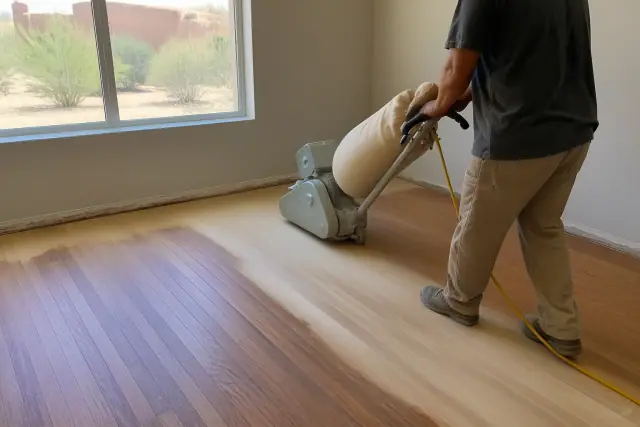
Worker using an industrial sander on hardwood bedroom floors during a restoration project in Phoenix, AZ.

Hardwood repair starts by comparing board moisture with subfloor readings and checking cupping, cracking, gapping, scratches, and UV fading. Isolated board replacement averages $273 to $293 depending on species and finish match, while full sanding and refinishing typically runs $2 to $7 per square foot; most whole-home jobs fall between $750 and $6,000. We use dustless sanding and oil- or water-based polyurethane finishes rated for high UV exposure.

Request Estimate

Luxury Vinyl Plank Installation & Repair

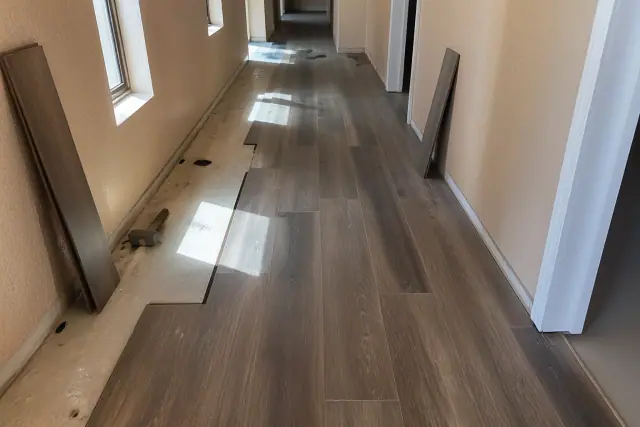
Luxury vinyl plank installation in a hallway in Phoenix, AZ, showing planks being placed in a staggered pattern.

Luxury vinyl plank can be installed as a click-lock floating floor or with full-spread adhesive after the subfloor is leveled. For furniture drag, pet-claw damage, or sun bleaching near patio doors, individual planks can often be replaced. We retain installed-product documentation so matched-lot replacement planks are less likely to leave a visible seam.

Request Estimate

Tile Floor Repair & Installation

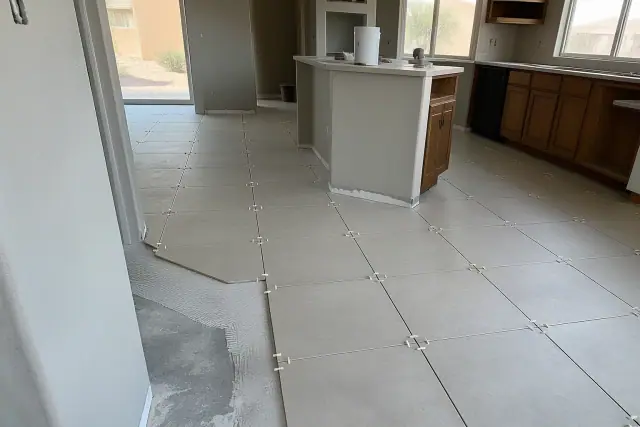
Tile spacers placed between new ceramic tiles during a kitchen floor repair in Phoenix, AZ.

When the substrate is sound, we can remove and replace an individual cracked tile without disturbing the surrounding field. Porcelain, ceramic, and natural stone installations follow ANSI A108-compliant setting methods with proper thin-set coverage and movement joints. Uncoupling membranes help reduce future cracking over Phoenix slabs.

Request Estimate

Laminate Floor Repair & Installation

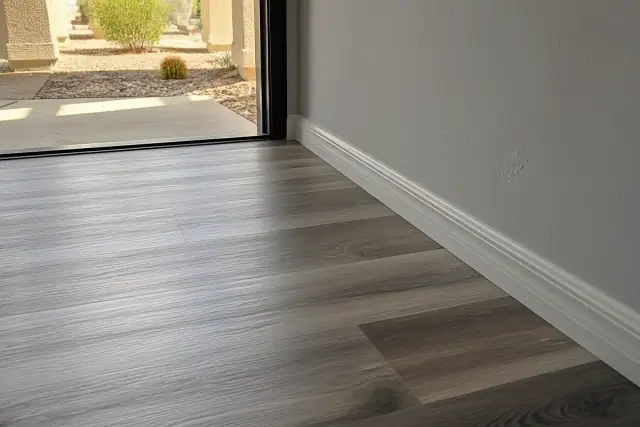
New laminate flooring installed with baseboards in a Phoenix, AZ home.

Minor laminate chips and scratches may accept a color-matched repair, but damage through the wear layer into the core requires plank replacement. We install with expansion gaps at walls and transitions and use manufacturer databases to look for matching discontinued profiles. Swollen, water-damaged laminate rarely recovers, so prompt assessment helps limit spread to adjacent planks.

Request Estimate

Carpet Installation & Repair

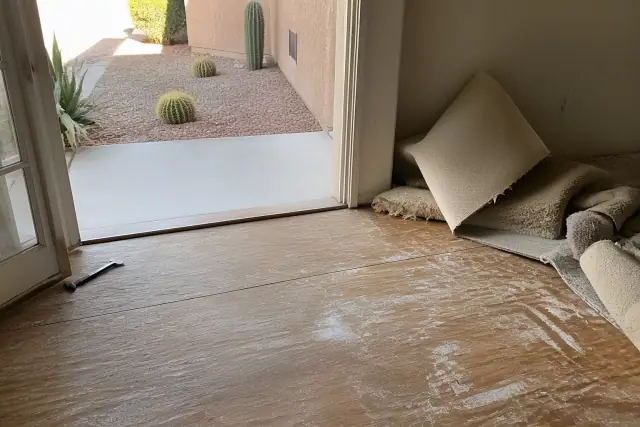
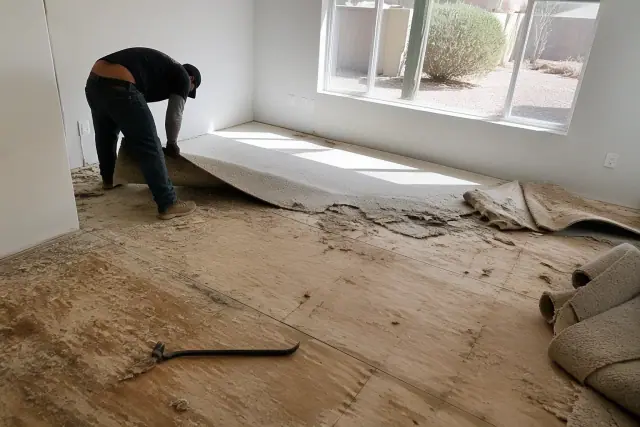
Technician removing old carpet to prepare a wooden subfloor for repair in Phoenix, AZ.

We install residential and light commercial carpet with proper tack strips, sealed seams, and padding selected for the space. Restretching is common in homes over five years old, and burns, tears, or pet damage can sometimes be patched with matching material from a closet or low-visibility area. Many manufacturer warranties require documented professional cleaning every 12 to 18 months.

Request Estimate

Epoxy & Commercial Flooring

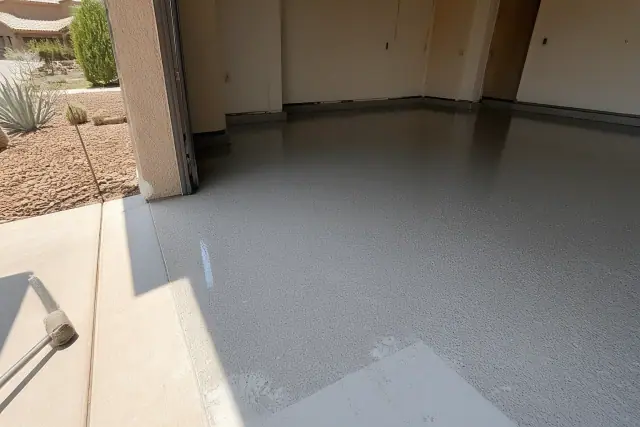
Freshly applied high-gloss epoxy coating on a garage concrete floor at a job site in Phoenix, AZ.

Epoxy systems for garages, workshops, warehouses, showrooms, and restaurant kitchens begin with mechanical grinding for stronger adhesion than acid etching. Coating thickness, slip resistance, and cure formulation are matched to foot or vehicle traffic. Commercial plans may also include phased scheduling, loading access, permit coordination with the City of Phoenix Development Services Department, and ADA transition requirements.

Request Estimate
Repair or Replacement

Choosing Between Floor Repair & Replacement

The right scope depends on how far damage extends, whether the substrate is dry and stable, and whether replacement material can be matched. These five approaches range from a small surface fix to full removal and new installation.

Technician patching a leveled wooden subfloor during a residential floor repair in Phoenix, AZ.

Targeted Surface Repair

When the substrate is sound and damage is isolated, surface repairs can restore appearance and function without replacing an entire room. Minor repairs such as scratches or a few damaged tiles typically run $200 to $1,200 per room in the Phoenix market, depending on the material and scope.

  • Spot-sand scratched hardwood
  • Reset loose tile or repair isolated grout
  • Fill minor laminate chips with a matched repair kit
  • Patch or restretch repairable carpet
  • Replace a damaged luxury vinyl plank
Request Estimate
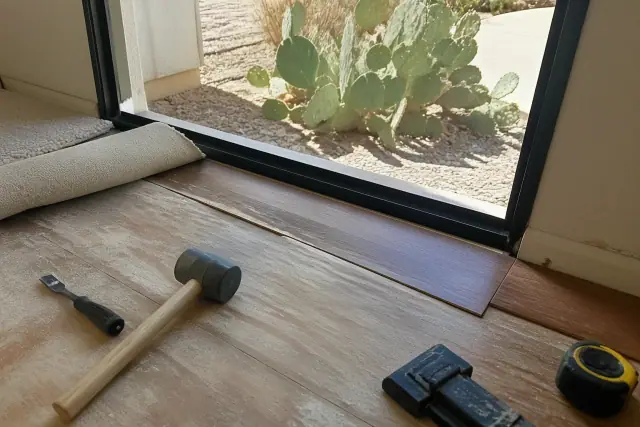
Contractor installing a new hardwood plank on a subfloor during a floor repair project in Phoenix, AZ.

Individual Board, Plank, or Tile Replacement

Material replacement works when the damaged pieces can be removed cleanly, a close match is available, and the surrounding installation remains stable. We check species, profile, dye lot, finish, and substrate condition before promising a seamless result.

  • Replace isolated hardwood boards
  • Remove individual porcelain, ceramic, or stone tile
  • Use matched-lot luxury vinyl plank where available
  • Replace laminate with core damage
  • Source carpet patch material from a low-visibility area
Request Estimate
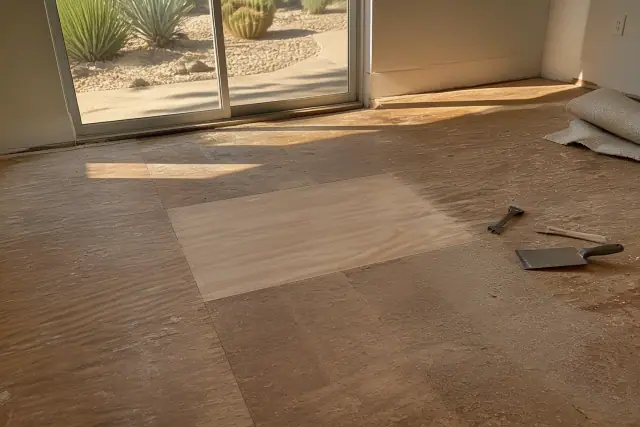
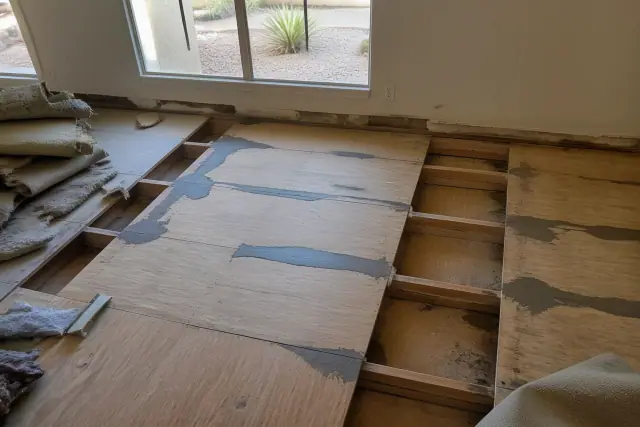
Technician leveling a wooden subfloor and joists during a home floor repair project in Phoenix, AZ.

Subfloor & Slab Correction

A finished floor will not stay flat or dry over a failing base. Uneven floor sections can cost $500 to $3,000 to correct, with the final scope depending on elevation variance, moisture, cracking, and how much flooring must be removed.

  • Test concrete moisture to ASTM F2170 standards
  • Extract moisture after leaks or monsoon intrusion
  • Level slab elevation variances before installation
  • Correct hollow tile or inadequate thin-set coverage
  • Assess cracked concrete and damaged subfloor areas
Request Estimate
Technician removing carpet to level a wooden subfloor during a home floor replacement in Phoenix, AZ.

Full Floor Replacement

Full replacement is often appropriate for widespread subfloor rot, buckled hardwood across multiple rooms, cracked slabs, or material that cannot be matched consistently. The scope includes removal, disposal, base preparation, and installation of material selected for the room and traffic.

  • Remove failed flooring and affected underlayment
  • Dry, repair, and level the substrate
  • Select material for moisture, sun, and traffic
  • Build in proper expansion or movement joints
  • Phase occupied commercial installations when needed
Request Estimate
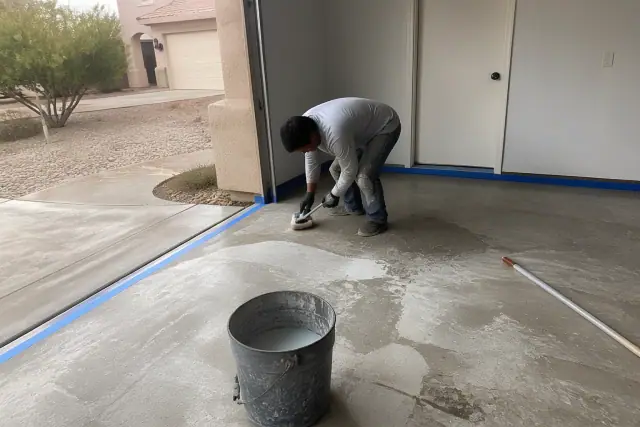
Concrete floor surface with masking tape and a mixing bucket during prep for epoxy coating at a home in Phoenix, AZ.

Refinishing & Protective Coatings

Refinishing or coating can renew a worn surface when the structure beneath it remains serviceable. The preparation and finish are chosen for the material, Phoenix UV exposure, expected traffic, and maintenance needs.

  • Use dustless sanding on worn hardwood
  • Apply oil- or water-based polyurethane finishes
  • Choose finishes rated for high UV exposure
  • Mechanically grind concrete before epoxy
  • Adjust epoxy thickness and slip resistance to traffic
Request Estimate
Finding the Right Fit

How We Choose the Right Flooring Approach

We compare damage extent, moisture readings, substrate stability, match availability, traffic, budget, and how long you plan to keep the property. The result is a written set of tiered options, from a focused repair to full replacement, with the durability and tradeoffs of each path explained.

Standards-Based Moisture Testing

Moisture can turn a sound-looking repair into another failure. We test relevant concrete slabs to ASTM F2170 standards and compare wood board moisture with subfloor readings before recommending installation, refinishing, or replacement.

Phoenix Climate & Subfloor Knowledge

Phoenix flooring must handle dry indoor air, monsoon humidity spikes, intense UV exposure, and slab movement over caliche-heavy soil. We account for those conditions through acclimation, leveling, movement joints, uncoupling membranes, and material selection.

Written Options & Warranty Guidance

We document the damage and put viable repair and replacement options in writing before work begins. Material, workmanship, maintenance, and manufacturer warranty details are reviewed so the responsibilities and care requirements are clear.

What Sets Us Apart

Why Phoenix Chooses Our Flooring Approach

Phoenix Expert Flooring combines licensed local crews with material-specific preparation. Tile work follows ANSI A108 setting practices, wood work follows National Wood Flooring Association moisture and acclimation guidance, and installations use materials selected for Phoenix temperature and UV exposure.

Get a Free Consultation

Cracked Tile & Grout

Tile can crack from slab movement over expansive soil or from a dropped object, while grout can stain or fail under hard water minerals from the Salt River Project supply. We determine whether the issue is isolated or points to substrate movement, lippage, or inadequate thin-set coverage.

Warped, Cupped, or Gapped Wood

Dry heat can pull moisture from solid hardwood, while monsoon humidity can drive cupping and movement. We compare boards with the subfloor and inspect south- and west-facing areas for UV fading before separating cosmetic wear from structural damage.

Water-Damaged Laminate & Subfloors

Water-damage calls rise from July through September when storm runoff can enter beneath exterior doors and reach laminate, hardwood seams, and subfloors. Swollen laminate cores seldom return to shape, and trapped moisture must be extracted before repair or replacement.

Scratches, Gouges & UV Fading

Desert grit tracked indoors can scratch hardwood, while furniture drag, pet claws, and direct patio-door sunlight can mark or fade vinyl and laminate. The depth of the damage and the availability of a matching finish or plank determine whether spot repair is practical.

Loose or Damaged Carpet

Foot traffic and temperature-driven expansion and contraction can leave carpet loose or rippled. Burns, tears, pet damage, failed seams, and worn low-density padding each call for a different repair, restretch, patch, or replacement plan.

Uneven Slabs & Hollow Tile

Minor slab elevation changes from soil settlement can telegraph through new flooring if they are not corrected. Hollow-sounding tile and lippage may also reveal poor thin-set coverage, so the substrate must be evaluated before new tile or planks go down.

How It Works

Our Floor Repair & Replacement Process

The process is designed to uncover the cause of failure before selecting the visible fix. From inspection through care guidance, each step keeps the condition, options, preparation, and finished scope clear.

01.

Inspect & Moisture-Test

We inspect the floor and substrate, identify the material, and test moisture where relevant. Commercial visits also account for square footage, loading access, occupied areas, and transition requirements.

02.

Document the Damage

We record where damage begins and ends, note moisture or movement patterns, and check whether matching boards, planks, tile, carpet, or finishes are available. This separates an isolated defect from a broader substrate problem.

03.

Compare Repair & Replacement

You receive written options when both repair and replacement are viable. We explain expected durability, preparation, matching limits, material choices, budget considerations, and whether phased scheduling makes sense.

04.

Prepare the Subfloor

Failed material is removed so the base can be dried, repaired, ground, or leveled as needed. Proper preparation addresses moisture, cracking, elevation variance, and contamination before the finish material is installed.

05.

Complete the Repair or Installation

Crews complete the approved repair, refinishing, coating, or replacement scope with material-appropriate methods. That may include expansion gaps, movement joints, full-spread adhesive, seam sealing, thin-set coverage, or an epoxy slip-resistance additive.

06.

Review Care & Warranty Details

At the walkthrough, we review cleaning and maintenance needs, installed-product documentation, and applicable manufacturer and workmanship warranty terms. Those records help protect the finish and simplify future matching or service.

Plan the Right Repair

Schedule a Floor
Repair or Replacement
Consultation

Request a free flooring consultation to inspect the existing surface, test moisture where relevant, measure the space, and compare viable repair and replacement options. You will receive a written estimate based on the material, preparation, removal, and installation the project actually requires.

Flooring Help

Floor Repair & Replacement FAQs

These answers cover repair costs, replacement decisions, moisture testing, material-specific fixes, maintenance, and what to expect from a Phoenix flooring consultation.

Call Our Experts

Repair is usually cheaper upfront. Isolated hardwood board replacement averages $273 to $293, while full refinishing typically costs $2 to $7 per square foot; if more than 30% of the floor is damaged or the subfloor has water damage, replacement may offer better long-term value. We test moisture and assess the damage before recommending either path.

Minor repairs such as scratches or a few loose tiles typically run $200 to $1,200 per room in the Phoenix market, while uneven floor sections can cost $500 to $3,000 to correct. Water damage can increase the scope when drying or subfloor replacement is needed, so an on-site inspection is necessary for an accurate written estimate.

The Rule of 3 is a general trade guideline: repair often makes sense when damage affects less than a third of the floor, while replacement is usually more cost-effective and visually uniform when damage extends across more than a third. Material availability, color matching, moisture, and subfloor condition can change that recommendation.

Yes. Minor chips and scratches may be filled with a color-matched laminate repair kit. If a dent, crack, or water damage reaches the core, the affected plank needs replacement because laminate cannot be sanded and refinished like solid hardwood.

Phoenix Expert Flooring provides hardwood repair and refinishing in Phoenix, Scottsdale, Tempe, Mesa, Glendale, and the greater Maricopa County metro area. Crews evaluate board and subfloor moisture, damage depth, finish matching, and UV fading before recommending spot repair, board replacement, or refinishing.

The difficulty depends as much on the substrate as the visible material. Removing old tile or wood, identifying moisture or cracks, leveling the base, and building in the correct movement or expansion space require careful preparation. Phoenix slab moisture and soil-related movement can make that preparation especially important.

We inspect the current floor, test moisture where relevant, measure the space, and discuss how the room is used. When both paths are viable, the written estimate can compare repair and replacement along with material, preparation, removal, and scheduling considerations.

Common issues include cracked tile from slab movement, warped or gapped wood from dry heat and monsoon humidity, scratched hardwood from desert grit, hard-water-stained grout, and water damage beneath doors and seams. Water-damage calls tend to rise from July through September during monsoon season.

Moisture testing helps determine whether damage is limited to the finish or reaches the slab or subfloor. We use ASTM F2170 testing on relevant concrete slabs and compare wood moisture with subfloor readings so moisture is addressed before repair, refinishing, or replacement.

Often, yes, if the tile can be matched and the substrate beneath it is sound. We remove the damaged piece without disturbing the surrounding field, then check thin-set coverage and movement conditions. Broader cracking may require slab correction or an uncoupling membrane rather than another isolated patch.

Many carpet manufacturer warranties require documented professional cleaning every 12 to 18 months. We review the applicable maintenance schedule at installation because soil, desert dust, traffic, and padding condition all affect carpet life.

Commercial-grade luxury vinyl plank, porcelain tile, and epoxy are common choices because their wear layers, slip ratings, and maintenance needs can be matched to foot or vehicle traffic. The right selection also depends on downtime, loading logistics, substrate condition, and whether work must be phased around occupied areas.

Material choice, room size, removal and disposal, subfloor preparation, access, and installation method all affect the total. Laminate and luxury vinyl plank generally cost less to install than solid hardwood or natural stone, but an on-site measurement is needed to price the actual scope.